

***Thank you for supporting independent investigative journalism in a time of grave peril with a paid membership.***
Author’s intro: I am so grateful for the women in this fight. I have sisters now all over the world, a family of warrior goddesses.
I often think of a lesson from intellectual historian Marci Shore, who taught me that history doesn’t tell us what’s going to happen, it merely offers suggestions.
As I have documented on these pages in depth, the Trump regime is operating from the fascist playbook, which we know much about. It’s not hard to do a deep dive on German and Italian history preceding and during World War II. The resources are rich and ample. More difficult is peeling away the propaganda about Soviet history. I made that my mission at the end of 2025 by mining the brain of Ukrainian historian Tetiana Boriak.
Some day, this boutique magazine will be discovered by future historians and investigative reporters, and I hope they find it useful. Only Ukrainians should be the final judge of Russia’s behaviors. Buried in Ukrainian history are all the Soviet lies, exposed for posterity, how Russia is a country of mass murderers, how Ukrainians can easily debunk the myths Russians tell about themselves.
Tetiana’s methodic and detailed lectures in our first multi-part Bette Speakeasy Series are extraordinary. I have written print reports on Part 1 and 2, as well as print extras on topics of discoveries made in those lectures. You will find all those at the end of this report.
Today, we’re going to focus on the Executed Renaissance, Stalin’s purge of Ukrainian identity through his mass executions of Ukrainian cultural leaders, from Part 3 of our Speakeasy series with her, which took place on November 30, 2025. We learn how Russia lied about its mass executions of the Ukrainian literati. How Russia still lies about those purges. How Russia sent family members false death certificates, with wrong dates and wrong causes. How the knowledge that any of these groundbreaking artists even existed were denied from Ukrainians for 60 years.
When I first learned about the Executed Renaissance from a lecture series by Shore’s husband, Timothy Snyder, I no longer doubted the value of reporters, writers, poets, historians, philosophers, translators, filmmakers.
When you do this type of work, there’s always some doubt that what you do matters. That it’s not so important. The Executed Renaissance proves that completely the opposite is true. That truth is so important, totalitarian regimes will attempt to purge all of it — first the truth-teller, then their work, their families, even their gravesites, as we learn in this report. They attempt to purge any memory of what was. Thankfully, they ultimately failed.
When I learned about the Executed Renaissance, I mentally doubled down on the work and its importance. What a threat one writer and mother, a veteran investigative reporter, is to a totalitarian regime. One war correspondent. One historian. What we do makes such a difference when the people who are waging these wars against us, the actual kinetic wars and the war for our minds, want to control the narrative all the time, as Tetiana beautifully explained to us when she talked about the Holodomor.
Just one more note from me before I turn these pages over to Tetiana: As most of you know, I’m working my way through Mike Duncan’s The History of Rome podcast series. And I wanted to offer you a quick anecdote about a Roman emperor who bought his crown from the Praetorian Guard — Didius Julianus in 193 AD, after he outbid another contender by offering each soldier 25,000 sesterces to buy the throne. He was killed in the palace by a soldier, after only 66 days of ruling. So he essentially used his wealth to pay for his own demise. I find that a somehow fitting allegory for today’s ruling autocrats, who may be using their immense wealth, greed, and lust for power to fly too close to the burning sun.—Heidi Siegmund Cuda for Bette Dangerous
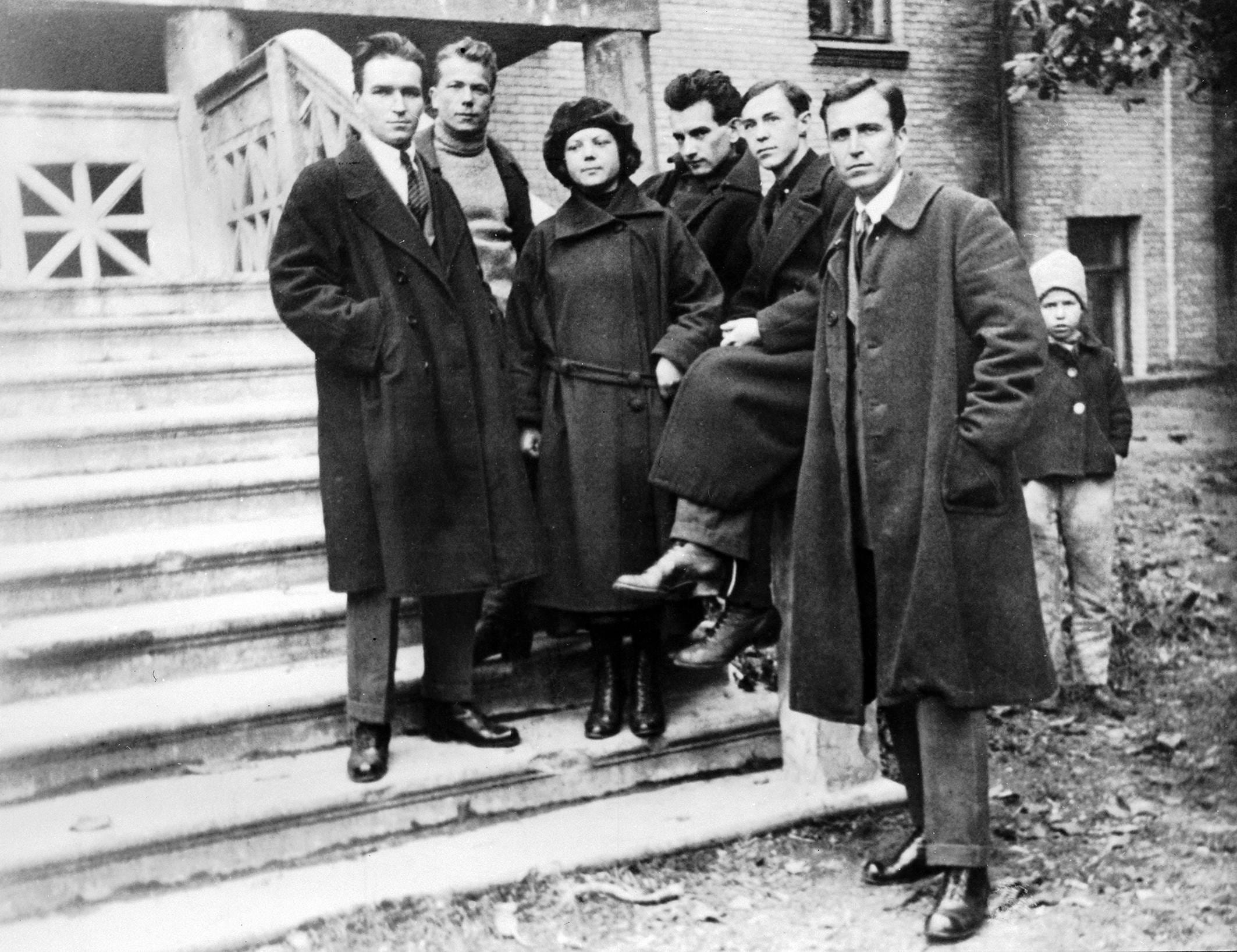
A SHAMEFUL MEMORY
Ukrainian historian Tetiana Boriak explains the Executed Renaissance, Russia’s purge of the Ukrainian intelligentsia — the blossom of a nation — in its failed attempt to destroy Ukrainian identity
Presented by Heidi Siegmund Cuda for Bette Dangerous
Tetiana: Good afternoon, good evening, good morning. Thank you for your time. Thank you for your interest, and I hope I will help you discover the whole world of what is called Executed Renaissance. But first, I would like to start with one quotation and one number.
The first is a number: during the 11 years of the ongoing Russia-Ukraine War 2014 - 2025, Russia murdered 239 Ukrainian writers, poets, translators, editors, people who are dealing with creating. We will talk today about the events that took place 90 years ago. The second one is a quotation by a poet who managed to survive these executions, Leonid Pervomayskyi, who wrote that poets reserve the right for themselves, rejecting all others rights, to belong to those who are killed and not to those who kill coldly.
Returning Their Names
I would like to devote our talk today to these people, the Ukrainian intellectuals, who were eliminated, erased from Ukrainian memory, Ukrainian culture, from Ukrainian society for 60 years. Only starting at the end of the 1980s and especially after 1991 — the collapse of the Soviet Union — their names began to return to Ukraine.
Still, the erasure of these people was so harsh that for many of them, we do not even have the exact details of their dates of birth or dates of murder. We do not have their graves for the overwhelming majority of the cases, and this is one of the instruments employed by the Soviet Union. This type of action is very typical of the Russian state back then — to erase people who were the bearers of what we call now identity.
The Bearers of Identity
Back then, this word ‘identity’ did not exist. But the Executed Renaissance will show you that, basically, the Kremlin was thinking in these terms, this ‘identity.’
Ukrainian identity was viewed as a threat to the existence of the Soviet/Russian Empire. That is why the Executed Renaissance took place.
The Red Terror
I do not start from the 1920-23 era when Ukrainization began to take place, and this process of a Renaissance blossomed that later was executed. It’s my obligation as a historian to start from 1917, the Red Terror, because Russia declared war on Ukraine already in December of 1917. You remember the so-called October Revolution. And in December, Lenin and company declared war on Ukraine.
If you look at the map, basically, the Russian Empire has collapsed. The center, Moscow - St Petersburg, was pretty small, compared to what is called in historical literature as Borderlands — the regions that were on the outskirts of the core of the former Russian Empire. And these outskirts obviously had their own vision on how to develop, and this vision was not tied to Moscow - St Petersburg.
And so in order to gain control over these vast amount of territories, an incredible amount of terror and violence had to be employed. And you have to keep this in mind when you try to understand the 20th century history of Russia and also the 21st century history of Russia, because violence, harsh violence, excessive violence, extraordinary violence and terror, were used to first, combat all enemies in the Borderlands, and yes, that means intellectuals, leaders, public, political figures who wanted to lead their nations in the direction of independent states.
So the mechanisms that were employed by the Kremlin were really violent.
Also keep in mind that the 1917 events took place in the course of the First World War, right? So it was already the third year of this war. Ukraine was a battlefield of this war as well.
So already, you had this level of violence, of terror, of all this kind of relations that were grounded, again, on violence. I’m sorry, but this is the term that you have to use when you speak about this Soviet period of Ukrainian history and Russian history.
And so Cheka was created — the extraordinary commission was established already in the end of 1917. So this was the tool that was already employed since the very beginning of existence of the Soviet regime. “We will combat them with an incredible level of terror,” was the plan.
Cheka
So Cheka was created with extraordinary functions. It basically was officially declared as a commission. But in fact, the level of powers, the level of the Commissariat, it was a kind of independent ministry, and so violence was already on the table since the very beginning of existence of the Soviet Union.
This is what I wanted to stress, because this explains how this logic of escalation of violence, how the spiral of violence was always going higher and higher.
Also, we have this equation by the Bolsheviks between the party and the interests of the revolution, of the party and of this Cheka. So they said that, basically they were declaring that the Cheka is their instrument.
And we now know that this period from 1917 to 1921 during occupation of Ukraine and other regions was called the Red Terror. And we know now that what was done was really incredible. For instance, we know that in Crimea, when occupation of Crimea was taking place, they not only shot their enemies, but they threw the bodies into the Black Sea. When Bolsheviks occupied Kyiv, they shot people who wore Ukrainian national dress, who spoke Ukrainian on the streets. They murdered the Ukrainian religious head.
So this was, at the time, pretty ordinary outlook of Bolsheviks, and this is how, basically, they managed to master this territory. Here is one example of this outlook. So it’s not only my reflections, but here is a confirmation. This is a poem by Vsevolod Balytskyi, who was the head of the Ukrainian Cheka, and he was appointed by Stalin during the Holodomor in order to make the repressions more intense.
Balytski wrote this poem:
“We rose together to battle. And there, where recently people lived so cheerfully, streams of blood poured out. So what? Let it pour, let it be. No mercy. Nothing will save you, nothing.”
So this was their feelings, intentions, mental frame they acted in. In Ukraine, we know that already in 1920, there were 24 concentration camps that could keep 20,000 prisoners. So Hitler had a good teacher. Hitler was not, unfortunately, the first one, and he was not even the second one, because we know that kind of prototype of concentration camp was created in Africa during the British Boer War.
But obviously Stalin, Lenin, the Bolshevik leaders, in the framework of this militarized and aggressive mentality, they elaborated the system of 24 concentration camps that could keep 20,000 prisoners. And the amount of these people who served in Cheka increased. In 1918, there were only 34 people. But then, starting from the second half of the 1920s there were more than 303,000 of these people.
So this escalation of violence was on the table. Then we come to an interesting point when the conflict between the Kremlin and Ukrainian authorities began to take place because what happened: Ukrainians who lost the Ukrainian revolution of 1917 - 21, when Ukraine was occupied with 1 million army, 85 percent of whom were ethnic Russians, they said, “Okay, we lost. But we have demonstrated that we as a people, probably not nation, but still as a people, we have our own language. We have our own culture, literature, history, we have economic resources, so we want real equal relations between Kharkiv (that was the first capital before the famine) and Petrograd/Moscow.”
So they had this intention, and then basically what happened: the Bolsheviks managed to sell communism to Ukrainians, because many Ukrainians, especially Ukrainian intellectuals, they really believed what was said and the declarations coincided with the intentions.
Remember, they said, “We’re creating a new federation of absolutely equal people, who have the right to self determination. They have the right to have their own language, culture, education, everyone is equal, no race, no ethnicity matters.” They were planning to conquer the world with communism, where everyone would be equal, and somehow the goods will appear from nowhere, but that was another issue. But everyone would be equal.
So the picture was pretty appealing. Many Ukrainians immigrated to Czech Republic, to Yugoslavia, during the persecution. So those Ukrainians, or Ukrainian intellectuals who remained, they mostly sincerely believed what Kremlin had sold to them.
But still, at the same time, the peasants had their own vision, they wanted to have land, they usually did not care about these high ideals. And we have an interesting quotation by the Cheka head from 1920, and he was writing about Ukrainian communists. He said that, “Well, the local communists are kind of good people. They have their small interests. They are not interested in our big ideas, they are adherents of the Ukrainian national idea.”
They were called Petliurivski because Symon Petliura was one of the leaders of the Ukrainian revolution, and so this term Petliurivski later became an accusation, and people got 10 years in concentration camps or capital punishment for being adherents of Petliura.
And already, in 1920, Russian Cheka said that still a lot of Ukrainian communists with an adherence to Petliura. “They have this vision of Ukrainian nationalism that we have to handle somehow.”
So this creates the background where the Renaissance later took place. Also, you have to keep in mind that Ukrainian organs of power did not have any independence. It was this strict vertical system where decisions came from the top to the bottom, and usually were not debated, although Ukrainian leaders, before the Holodomor, they still tried to debate, using this small period of liberalization of the 1920s.
And why they needed this brief period of liberalization was due to the First World War, and the occupation in various Borderlands. The economy was destroyed, during the Red Terror, they even took hostages. It was an official element of conquering, of mastering the territories when they took hostages. And if the village, for instance, would not supply grains, then the hostages would be executed. So this mentality could not last long, because there were no more economic resources.
Ukrainization
And so the state said, “Okay, we introduce new economic politics. And it came in hand with what was called Ukrainization… So the idea was to allow the Borderlands, these outskirts of the Soviet center, to have education in their native language, to lead cultural activity, science, in their native language.
But what was the goal?
It was not only to handle the economic problems. It’s much more interesting than that. We do not know what the number one goal was, but I can tell you 2,3, and 4. We cannot know what was the most important reason why they did this.
But historians see the goal of these politics was basically a lie. The Soviet Union was built on a lie, and lie was an instrument, because basically Soviet propaganda, especially during Holodomor, it was lie, manipulation, lie, disinformation. So this politics was also a lie, because it was only a temporary retreat needed by the Bolsheviks in order to gain more control.
A Temporary Retreat
And Ukrainians, as I’ve mentioned, accepted this policy sincerely. On the one hand, this resulted in this amazing expression and explosion of everything Ukrainian — Ukrainian language, theater, children’s literature, literature for adults of various genres, cinema, education, science. It was something incredible when we think of the totalitarian state. But it happened only because the state needed this small period to regroup.
It was less than 10 years. Basically it lasted, officially from 1923 to 1932. And it is not accidental that the politics of Ukrainization ended exactly when the Holodomor began in the end of 1932 — it was not a coincidence, obviously.
So what was the goal of Ukrainization? It was to gain more control, to give some break to the economy, together with the new economic politics, the goal was to create a positive image of the Soviet Union abroad, because obviously the West did not completely know about the Red Terror.
So Moscow wanted to present itself as a good democratic state, where “you see all our nationalities have the right to speak their own language, no repressions. Look, everything is fine.”
This was one of the goals. Then they had to get Ukrainians to buy in again, and Ukrainians, unfortunately bought this lie. They were told, “Look, we had this war in the past, but now you have all these rights secured, everything is fine. Speak your language, write your history books. Kremlin does not care.”
Then one of the goals was also to get the Ukrainians who immigrated to return, because a lot of intellectuals who were scared of what they saw during the 1917 - ‘21 terror escaped, and many of them returned.
And I will tell you about the fate of some of these famous intellectuals. And you can already guess it was not so happy or so lucky.
The Ecosystem of Violence
So Ukrainization began in 1923, but the documents were declassified not that many years ago about the spying on Ukrainian intellectuals by Cheka. And this is something incredible, because we see the whole ecosystem.
Lynne Viola, the American-Canadian historian, called it an ecosystem of violence. And this is a pretty concise term, because it was this system that was combined with the past experience of extreme violence with an outlook that was directed toward suppression.
It was this system of control over intellectuals especially. But the villages were also under surveillance. Today, however, we’re talking today about intellectuals. So they had secret collaborators — the whole society was infiltrated with these spies, who reported about the moods of the population, because they did not have sociological surveys, right? They could not have them.
So this was one of the instruments to measure the society’s moods, what the society is thinking, how they’re thinking, what are the groups? What are the intentions, where the society is developing, and so on. But on the other hand, for historians, this is a very useful resource, because we can see the mood from these sources.
And the politics of Ukrainization did not mean that there was no persecution during this period. The first famous show trial was organized in 1930, when these politics were officially under way, resulting in 45 arrests and deportations to concentration camps. Historians estimate about 30,000 people were later accused and blamed as being enemies in connection with this show trial.
Nazism vs Soviet Totalitarianism
Also, what many people do not see when they think about the difference between Nazism and Soviet Totalitarianism is how an enemy was defined, and we know that in the Nazi system it was defined by race. Jewish people were defined as enemies by their race.
The Soviets had another approach, because race basically did not matter. What mattered was identity. Again, they did not use this word, but they defined the enemy according to their political needs.
And so this meant that anyone could be blamed as an enemy, according to the interests of the party. So keeping this in mind, returning to Ukrainization, it was really the first time when they had the state — not pure Ukrainian, but Soviet Ukrainian — still, it was the state with borders, with the currency, authority dependent on the Kremlin, but they had ministers. They had organs of power. And intellectuals.
People finally got access to their intellectuals and the Ukrainian language. It was really something. And again, for Ukrainians, it became a sign that they are self sufficient.
They really wanted federal relations that could not exist in the model that was created by the Bolsheviks. Obviously, this is why the Holodomor took place right after the end of Ukrainization. People can’t resist when they’re starving and weak.
There was an interesting talk with a prisoner in a Soviet concentration camp. One was a former top Ukrainian Party politician. And he said this to a man who managed to survive, who escaped to the West during the Second World War, and who wrote in his memoirs “that, we this party, we really believed and sincerely had a hope that we were building this bright future. But you see how it turned out. I’m here with you in this one concentration camp.”
This is how the society, the world, was cheated.
The culture of that period had an obvious contradiction between the Ukrainian intentions and the vision the Kremlin developed. It was a formula that art, culture, literature had to be socialist in content and national in form.
So a Ukrainian could wear their embroidered skirts or sing some songs, but only songs that had socialist content. And what Ukrainians did during Ukrainization, they created Ukrainian content in national form and content.
So this was something that the totalitarian regime could not handle.
And now let me tell you some examples from the people.
One of the ministers of education in Ukraine was arrested in 1933 during the famine. He was accused of all these crimes that were described by the Soviet regime, and he attempt to commit suicide, but he failed.
And he left a suicide note about his attempted death as a protest against the system. And historians believe that since his attempt failed, because he was in prison, in exile, he was poisoned.
He was allowed to return to Ukraine in 1946 and was then poisoned. Historians say that it was an order of Stalin, and he was poisoned by Pavel Sudoplatov, who organized the murder of Trotsky. He also organized the assasination of Yevhen Konovalets, who was the head of the Ukrainian party in exile. Sudoplatov organized the murder of actor and producer, Solomon Michaels, in 1948, and also the plot was part of the murder of Ukrainian Minister of Education, Alexander Shumsky.
Another minister of education, Mykola Skrypnyk, was a very interesting person. He committed suicide in 1933 during the famine, because he knew about it. He went to the villages, and he was trying to save himself. And this is also very telling about the horrible system that was built.
In Nazism, and by the way, Stalinism is an incorrect term, because then we imply that what was after was much better. No. So you have Nazism and Soviet totalitarianism, and for the Nazis, if you could demonstrate loyalty, this could be enough to survive.
To Kill a Human Inside a Human
While the Soviets, they wanted to kill a human inside a human. They needed to break the people. That is why they did all the tortures, to force people to sign, “Yes, I confess that I’m guilty” in all this list of crimes people were accused of.
So somehow they knew that in order again to control this huge, huge territory that was initially hostile, because it was conquered by force, they used violence.
Skrypnyk knew the clouds were getting darker and darker, over over his head, and he committed suicide. He had helped engineer Ukrainization. His suicide in 1933, along with the poet Mykola Khvyliovyi, marks the end of this period of liberation.
The Sincerest Communist
Let me quote Khvyliovi’s suicide note.
What pushed his decision was the arrest of a writer and friend Mykhailo Yalovy:
“The arrest of Yalovy is the execution of an entire generation for what? For the fact that we were the sincerest communist. I don’t understand anything. The responsibility for the actions of Yalovy’s generation lies with me. Do you know how much I love life?”
The Kremlin managed to sell communism to Ukrainians, and many of them bought it.
The choice for Ukrainians was to live in the simulacrum or to exit. But there were not many ways to exit. You could not leave the Soviet Union. The borders were already closed by the end of 1920s.
You could try to inform on other people. Yes, you could become an official informer of the Kremlin. You could disagree, and then you would end up in some more months in Siberia, or a camp in Kazakhstan.
Raise Their Voice
Ukrainian intellectuals of the 1920s, the writers, people who work with the word, with literature, they basically fulfilled much more obligations than just being a writer or a poet. They helped with societal development and they launched the discussions that went outside of the frames of pure political, literary issues like, yes, what type of verse to use… they were this first generation of Ukrainian intellectuals who managed to raise their voice as they thought.
It turned out that, no, they couldn’t. But initially, when the Soviet regime was gaining strength, this was allowed for less than 10 years. And so they discussed many issues that basically turned out to be political ones.
And Mykola Khvyliovyi pushed the discussion on how self-sufficient Ukrainian literature is, in turn of its relations with the metropoli, with Russia. And he effectively said, we have absolutely a European background, tradition, ties, themes, and way of thinking. We need to depart from this Pushkin story and other Russian icons that were imposed by the Kremlin. We are self sufficient. We have poets, we have literature, we have translators. We are incredible, and we must look towards Europe.
And obviously, this is something that could not be tolerated and was not tolerated. He also wrote an amazing short story, Ya (Romantyka). It’s difficult to translate — but I Am (a Romantic) is an approximate translation.
He wrote about this horrible moral choice that 10s of millions of forced Soviet citizens had to endure. He wrote about the tragedy of a son who went to serve in the Cheka having high ideals that “we will eliminate all enemies, and then we will create this bright future.” And so this Cheka guy killed his own mother, and after the murder, he felt that he basically lost himself in this life. So this is psychological. The author committed suicide like the script.
During the famine, they didn’t write. We do not know, but we can guess that they also viewed the man-made famine as one of the instruments of repression, of collapse of the world they were trying to build.
In this Soviet way of thinking, of living, the term the Executed Renaissance, was introduced by Yurii Lavrinenko, who was a Ukrainian literary critic. He was also imprisoned and managed to escape during the Second World War.
He published the book in Paris, and called it the Executed Renaissance, a suggestion by his Polish publisher for Kultura, Jerzy Giedroyc. The writers themselves, they called the movement, the Red Renaissance.
The Blossom of the Nation
The repressions were brutal, the Kremlin could not allow Ukrainian identity, and people were used and broken. The system broke them, and for some, they were used till the end of their lives.
The Executed Renaissance is associated with Sandarmokh, the place of mass execution, located in Karelia, Russia, that was devoted to the 20th anniversary of the Great October Revolution. It’s only one of the sites of mass execution. There were many more, but it became closely associated with Ukraine because out of 1111 people whom we know by names, 287 were Ukrainian.
These people were executed during eight days from October 27 to November, 4, 1937 and 23 of these 287 Ukrainians were Ukrainian intellectuals and writers.
For Ukrainians, if you start reading these names, there is this term, the Blossom of the Nation.
These were people who were the bearers of Ukrainian identity, and could manifest it, and they were murdered, and it was only one of the execution locations that we know about. Historians say that 9,500 people were executed, and only the names of a bit more than 1000 of people were able to be established — their names, last names, people of 58 nationalities and ethnic groups, and all the skulls have spaces from bullots. So they were shot.
What is very telling about the Russian state is that it denied the executions, like it denied the execution in Katyn, like it denied the secret protocols of the Molotov-Ribbentrop pact.
But even more now, since 2010s, the Russian state claims that these are the victims of the Second World War, and these victims were executed by the Finnish army. So they deny these crimes.
This is one of the reasons and symptoms of the deep illness of the contemporary Russian society. And the deep sickness of the Soviet and now Russian leadership. And by the way, the NKVD Captain of State Security, Mikhail Matveyev, the executioner who committed these mass murders together with another perpetrator, received a gift for “fighting counter revolution.” He received a record player with new records for committing these murders. He died in Leningrad in 1971 and peacefully lived his life. While there were other similar places, like Bykivnia Forest on the outskirts of Kyiv.
Historians now know of at least 16,000 victims by names, there are many more, and they say that in total, it could be 100,000 murders.
These are victims of the so-called Great Terror of 1937, ‘38 but now that we know the scale of execution and repressions, we see that it was just one of the waves of terror.
Just One of the Waves of Terror
The terror had already begun in Ukraine in 1917, when Russia declared war against Ukraine.
Among the Sandarmokh victims was Les Kurbas, he was a very innovative, a very modern theater director. And historians say that had he been alive and able to communicate with his Western colleagues, he would definitely be recognized because of his modern approaches he employed.
The capital was Kharkiv, as I’ve mentioned, before the famine, because only after the Holodomor did Stalin dare move the capital from Kharkiv to Kyiv. So this is one more confirmation that the famine was orchestrated and organized to combat the blossoming and fostering of Ukrainian identity during the Renaissance period.
In Kharkiv there was a house called Slovo, which means ‘word,’ and it was built for writers. Out of the 60 writers who lived there, 40 were arrested, shot or imprisoned.
Kurbas, who also lived in Kharkiv, received a gold medal award from an international theater exhibition in Paris in 1925 for his avant garde theater, Berezil’s design by Vadim Meller.
Another iconic contemporary artist was Mykhailo Boichuk, who has been compared with Diego Rivera, and was known for his monumental style, fusing Ukrainian folk art with Byzantine and Renaissance style. His art and heritage, unfortunately, was demolished, and we have almost nothing of it left, except for some books, some that was viewed on paper.
Land
Filmmaker Oleksandr Dovzhenko is a very interesting case, because, officially, he survived.
He made the film Land, also known as Earth, in 1930 and the film was banned in Ukraine until 1958. It is considered to be one of the best Ukrainian movies.
UNESCO in 2015 defined this movie as one of the five best movies in world cinematography. And European International Jury said that it is one of the 10 best movies in the world. Dovzhenko was trying to present the new ideology that was coming, but he was trying to locate it into an absolutely Ukrainian landscape, Ukrainian mentality, Ukrainian traditions, Ukrainian architecture.
He showed how these two worlds are basically incompatible, they cannot coexist. Charlie Chaplin lauded the film, saying the “Slavs by now have given one artist to world cinematography, thinking, and poetry, Oleksandr Dovzhenko.”
So what happened to this amazing cinema director and producer?
In 1932, ‘33 he realized that, like Khvyliovyi and the others, the clouds were getting darker and darker over his head. Khvyliovyi chose suicide, like Skrypnyk.
A Prisoner In This Golden Cave
Instead, Dovzhenko escaped to Moscow in 1934 and became a kind of hostage, a prisoner in this golden cave. He was not allowed to return to Ukraine. Although he was saying this, he was asking for permission. He only was in Ukraine during the Second World War as an author. He wrote his horrible, scary diary.
It detailed the horrors he saw and how Ukraine was ruined by the war, how Ukraine was neglected by the Soviet authorities, by the party, how people were thrown into this catastrophe, and how the Ukrainian people, how their cultural heritage was destroyed, and what kind of consequences this would have.
He also mentioned famine in the diary. Initially, he was trying to make a film based on his diary, and obviously, Stalin got mad after reading his diary about the Second World War, he was not permitted to film anymore.
Several months before he died, he began making a movie again, but he did not complete it.
And obviously the movies he made after Land from 1930, they were made under regime pressure. The topics, some were comedies, were careful. But even being careful did not secure him. His wife was supposedly an informer, like what happened to many famous people.
Carol of the Bells
Composer Mykola Leontovych created the origins of the Christmas song, Carol of the Bells, which was grounded in the Ukrainian tradition of multi-voices and based on the Ukrainian New Years song Shchedryk. And then an American composer of Ukrainian origin, Peter J. Wilhousky, in 1936, wrote the English lyrics that became what we now know as Carol of the Bells. It became a kind of American symbol of Christmas.
So initially it was Leontovych who composed the piece. And guess what? He was murdered by Cheka in 1921 in the house of his father when he went to visit his parents.
He was a famous Ukrainian composer, and he was murdered far ahead of the Great Terror and the Executed Renaissance.
The National Father of Ukrainian History
Mykhailo Hrushevskyi was the national father of Ukrainian history. He wrote many volumes of history, and Ukrainian rule books, and he was one of the leaders of the Ukrainian revolution of 1917 - ‘21. (Author’s note: He wrote ‘A Shameful Memory’ in 1926, an article published in the journal ‘Ukraina,’ that reflected on the impossible position of Ukrainian intellectuals, forced to navigate their way in a “shameful” political landscape, while trying to preserve and celebrate national cultural identity and academic achievements. This work inspired the title of this report.)
Tetiana continues: He had immigrated to the West, after the collapse of the Ukrainian statehood and Bolshevik occupation in 1921. He lived in Austria, Vienna, for some time, and then he, like many intellectuals abroad, believed in the Soviet promises of fraternity, equality and brotherhood and that bright future that was promised. So he returned with his family to Ukraine, and in 1931 the persecutions began of his students and followers.
His school was dissolved, and like Dovzhenko, he tried to save himself. He moved to Moscow. He was arrested there, released, and at the age of 68, he died during a simple operation. Historians believe he was murdered, like many other dissidents before and after him.
One of the signs of this being a murder by the Soviet regime is that it was trying to eliminate not only the person, not only his or her voice and the art that remained, but his family.
For instance, his daughter Kateryna, who was a famous anthropologist, was arrested in 1938 and died in Moldova in 1943. We do not have any trace of her grave.
His brother Oleksandr Hrushevskyi was released of all his positions in 1933 during the famine. Again in 1938, like Kateryna, he was arrested and died in a camp in Kazakhstan. His nephew and godson Serhii Hrushevskyi was murdered in Sandarmokh.
Purging Entire Families
Krushelnytskyi family had a similar story. Antin Krushelnytskyi was one of the ministers during the Ukrainian revolution. He lived in Lviv, that was part of Poland at that time. He was not only a statesman, but a writer and literary critic. He believed in the information warfare that the Kremlin had put into the whole world trying to present itself as a paradise for all who were persecuted.
And so in 1934, he moved with his family to Kharkiv, to Slovo Building, and in three months he was arrested. He was sentenced to three years in prison, in Solovki Prison Camp, but he was shot earlier in Sandarmokh.
So what happened to his family? His wife, Maria, fell ill after the arrest of family members, and she died in a hospital in Kharkiv. In 1935 his daughter, Volodymyra, who was a dermatologist, perished somewhere, somehow, we do not know the details, but she perished in Solovki. In 1937, his two sons, Ivan, a poet, and Taras, a writer and a translator, were shot in Kyiv.
His two other sons, Bohdan Krushelnytskyi and Ostap Krushelnytskyi, one was an economist, and another was a journalist, and film researcher: they also were shot in Sandarmokh in 1937.
The First Urban Novel
Valerian Pidmohylnyi was a writer who wrote what is believed to be the first urban novel, The City (Misto). Why? Because Ukrainians at the time were mostly peasants, it was a peasant nation: 85 percent of the population, approximately, were peasants and this process of urbanization began in the 1920s.
People began moving to the cities when they still could do this before collectivization, because after collectivation, they were not assigned passports and were turned into slaves in the collective farms.
But in the 1920s, immigration streams were here and there, and so he wrote this urban novel. And literary critics say that he followed the traditions of writing novels by Balzac and Jack London.
And again, his heritage was banned until 1989, and now this novel The City is translated into many languages, including English.
He was a renowned modernist, and he was murdered by the NKVD in Sandarmokh.
Author’s note: She then soberly lists a series of names. I encourage you to spend time researching all…
Mykola Zerov
Maik Johansen
Ostap Vyshnia
Nikita Khrushchov
Danylo Sherbakivsky:
Ahatangel Krymskyi
Pavlo Tychyna
Volodymyr Sosiura
Maksym Rylsky
Vasyl Symonenko
Alla Horska
Vasyl Stus
Playwrights who felt the pulse of the people, sharper than most. A poet, famous for his lyrics. More writers, translators, a philologist, a scenerist, a humorist — one who was released from a concentration camp because Khrushchev told Stalin he could be useful. More suicides, more who chose to “rape their own soul” and serve Moscow. She talks about an anthropologist and art museum specialist Mykhailo Bozhko, who threw himself into the Dnieper River. His suicide note read: “I’m tired to leave the museum — I gave the best years of my life. I do not have strength.” His burial turned into a protest meeting, and later, many participants of this funeral were later repressed, and in 1937 his grave was demolished.—hsc
Liquidation of Memory
Tetiana continues: So it was not only about taking away the voices, you know, to extort the people, but it was also about liquidation of memory so that no trace in a library, in a cemetery, in a university auditorium, in a book, no trace in some encyclopedia, no trace of this person would exist.
This is how Soviet totalitarianism was established in itself and how it broke the nations it managed to occupy.
Data of Mass Murder
There is some data on the Executed Renaissance.
In the Ukrainian diaspora after the Second World War, historians estimate that in 1930, 259 Ukrainian writers were published.
After 1938, only 36 were left — so they asked, where did 223 writers disappear to? The Soviet authorities gave an official reply.
It was after the Second World War when they were trying to be nice again, to create and contribute to a positive image of the Soviet Union. So they responded and said that 17 writers were executed, eight committed suicide, 175 were arrested and deported to the concentration camps, 16 were missing, seven died by themselves.
Author’s note: she lists more examples, a scholar Ahatanhel Krymsky, who spoke 60 languages, whose books had been banned since the beginning of the 1930s, who translated Crimean history, arrested in 1941 at the age of 70. She mentions survivors: Pavlo Tychyna, a poet who is Shakespeare to Ukrainians. In 1933, he wrote a poem during the famine, The Party Leads Us. He made that moral choice she describes, aimed at killing a human being inside a human being, submitting to totalitarianism. He is remembered for his love poetry, and was forced by the Soviets to decline the candidacy for a Nobel Prize in 1967 due to his Ukrainian heritage. She talks about the double identity many poets and writers took on, and how Ukraine was deprived of its intellectuals.—hsc
Tetiana continues: If someone asks why Ukrainians don’t like the Soviet period? This is the answer: tens of millions of victims.
During the so-called Ukrainization period, when the first show trials began, approximately 30,000 of Ukrainian intellectuals of various levels were arrested, executed or deported.
So I would like to finish where we began, in Sandarmokh, the site of mass murder.
As I mentioned, the Soviets denied Sandarmokh. Ukrainian historians knew about it only thanks to a Russian activist, who was also a member of Memorial — an organization that was closed in Russia in December 2021, just two months before the full-scale aggression.
This institute was closed in Russia, and one of its members admittedly got many years of imprisonment for his job, for his fight for memory, his fight for the Soviet victims, his fight for truth. Again, the Soviets had lied and said it was the Finns who committed the murders. But the truth, we know it, it is documented.
About the Memory
About the memory, this is very important that these people who were executed as part of the Executed Renaissance, as part of this horrible terror machine, their relatives received death certificates. These certificates said that these people died much later than they were executed. They were executed in 1937 and some of their relatives were told that they are still alive. Or that they are in prison, imprisoned in a camp somewhere.
They were told they did not have the right to communicate. But that these people are alive, and then they send the certificate that these people died in 1942 or 1943 because of a sick heart or because of heart attack.
Then about Bykivnia, one more spot I’ve mentioned that is a forest on the outskirts of Kyiv. Ukrainians did not know about this until 1962, when there was a meeting of an arts club in Kyiv. This was the beginning of the dissident movement in Ukraine. And so it was this meeting of young Ukrainian intellectuals, under Soviet rule, who did not know about the Executed Renaissance at all.
And then one woman came to them and said, “There is a fire spot in Bykivnia, you should go there.” And so these young artists, intellectuals, and writers, they went there and saw boys playing football with human skulls.
And they began to question the authorities. And then what happened? One by one, they were murdered. Poets, artists, murdered. Arrests of Ukrainian intellectuals began again.
And the last Ukrainian prisoner left a Soviet concentration camp in November of 1990. Can you imagine? It was already five years of Gorbachev Perestroika, of liberalization, of again, creating this nice, positive image of nice, democratic Russia.
But the last Ukrainian prisoner left the camp, a Soviet camp, not a Nazi camp, in November of 1990.
Imprisoned poets became the symbol for Ukrainian people of resistance.
So returning to the beginning of my talk, 239 people, Ukrainian intellectuals, were murdered by Russia in the Executed Renaissance, cutting short the blossom of a nation.
I often say it is interesting to write history books, but it’s pretty bad to live in this history book, as we see the same patterns over and over again.
Since the beginning of the war against Ukraine in 2014, if you want to understand more about the reasons for it, you should simply understand a bit more about the Ukrainian history of the 20th century. Because the answers to the questions why Russia is doing what it is doing, or what are the methods, the intentions, the goals… these answers are hidden in the Ukrainian history of the 20th century.
****
This interview transcript, lightly edited for clarity and brevity, is from Part 3 of the Bette Dangerous Speakeasy Series with Ukrainian historian Tetiana Boriak, which took place on November 30, 2025.
****
List of people referenced for further research:
Leonid Pervomayskyi
Felix Dzerzhynskii
Viachelav Molotov
Vsevolod Balytskyi
Mykola Kulish his drama „Myna Mazailo”
Slogan “socialist in content, national in form”
Mykola Skrypnyk
Oleksandr Shumskyi
Pavel Sudoplatov
Ievhen Konovalets
Solomon Mikhoels
Yurii Lavrinenko
Sandarmokh in Kareliia
Bykivnia Forest close to Kyiv
Mikhail Matveev
House “Slovo” in Kharkiv (“Word”)
Mykola Khvyliovyi, his slogan “Away from Moscow”
Mykhailo Yalovyi
Les Kurbas, hos theater “Berezil”
Mykhailo Boichuk
Oleksandr Dovzhenko
Mykola Leontovych, “Shchedryk”
Petro Vilhovsky
Mykhailo Hrushevskyi
Kateryna Hrushevska
Brother Oleksandr Hrushevskyi
Serhii Hrushevskyi
Krushelnytskyi family: Antin Krushelnytskyi, Maria Krushelnytska, Volodymyra Krushelnytska; Ivan Krushelnytskyi, Taras Krushelnytskyi, Bohdan Krushelnytskyi and Ostap Krushelnytskyi.
Valerian Pidmohylnyi
Mykola Zerov
Maik Johansen
Ostap Vyshnia
Nikita Khrushchov
Danylo Sherbakivsky
Ahatangel Krymskyi
Pavlo Tychyna
Volodymyr Sosiura
Maksym Rylsky
Vasyl Symonenko
Alla Horska
Vasyl Stus
****
More on Tetiana Boriak: refugee from the Russian war, Ukrainian historian, and Doctor of Historical Sciences (Dr. habil.) (2024), PhD in History (2008), Associate Professor, Researcher at History Faculty, Vilnius University (Lithuania). Received her MA in History from Kansas University (Lawrence, KS, 2004–2006). She specializes in Holodomor, Soviet totalitarianism, memory studies and social history. Author of three books, two awards: “Oral History as a Source for Holodomor Studies: Formation of Eyewitness Testimony Collections and their Informative Value” (2024; Research Prize of the Rector of Vilnius University 2024 for “significant research work”); “1933: “Why Are You Still Alive?” (2016; the all-Ukrainian award “the Book of the Year” (2016, nomination “History”, category “Research/Documents”). MSCA4Ukraine (Marie Skłodowska-Curie Actions for Ukraine) Fellow (2025–2027). In 2013–2014 Fulbright Fellow at Harvard University (Ukrainian Research Institute, Boston, MA). Author of 90 articles of them about 40 articles on Holodomor. In 2010–2017 was an assistant of the journalist, researcher, columnist of the Washington Post, Pulitzer Prize winner Anne Applebaum in the project of preparation of an English-language book about the Holodomor in Ukraine for a Western audience: “Red Famine: Stalin’s War on Ukraine” (2017; two awards). Host of the historical educational program “History with meat” (2017– February 2022) – about 70 episodes, available on YouTube. Editorial board member of several journals and a member of several historical professional associations. Participated in more than 70 conferences.
Photo courtesy Tetiana Boriak
****
****
More reading from the Tetiana Boriak/Bette Dangerous series:


****
Bette Dangerous is a reader-funded magazine. Thank you to all monthly, annual, and founding members.
I expose the corruption of billionaire fascists, while relying on memberships for support.
Thank you in advance for considering the following:
Share my reporting with allies
Buying my ebooks
A private link to an annual membership discount for older adults, those on fixed incomes or drawing disability, as well as activists and members of the media is available upon request at bettedangerous/gmail. 🥹
More info about Bette Dangerous - This magazine is written by Heidi Siegmund Cuda, an Emmy-award winning investigative reporter/producer, author, and veteran music and nightlife columnist. She is the cohost of RADICALIZED Truth Survives, an investigative show about disinformation and is part of the Byline Media team. Her Hot Type column appears in Byline Supplement. Thank you for your support of independent investigative journalism.
🤍
Begin each day with a grateful heart.
🤍
Thank you, Tetiana and Heidi, for this rich document. So much to learn.
I am so glad I found you here. I am learning so much.