

***Thank you for supporting independent investigative journalism in a time of grave peril with a paid membership.***
Author’s note: With the help of a Ukrainian scholar, I am rewriting the history of what we know about communism. Any romanticized notions go out the window when we view history through the eye of a refugee-historian, with access to key documents that tell a cold and hard story about lies and theft, murder and starvation. We are offering a service to reality that helps us in this grave moment when political starvation proves again convenient to dictators and war criminals who talk of peace, as fascist dictators did a century ago. The following transcript, edited lightly for brevity and clarity, is from our interview with Ukrainian historian Tetiana Boriak on November 23, 2025, about the history of the Holodomor, Stalin’s man-made famine, which took the lives of 3.9 million Ukrainians. While working on a book project on the topic in February of 2022, Boriak realized that ‘Russia was killing us again,’ and she sought refuge in Lithuania for her and her children. She is now an associate professor in the History Department at Vilnius University. This interview took place during the week of the Holodomor Remembrance and is part of our three-part Speakeasy series with her. As you will learn, the Soviets were expert at creating fake realities to fool the West, a tradition that continues today.—hsc
FAMINE AS WEAPON: Exposing Soviet Evil
Words by Tetiana Boriak; edited by Heidi Siegmund Cuda, from Part 2 of our Speakeasy series with the Ukrainian historian on the history of the Holodomor, Stalin’s man-made famine
Begin transcript:
Tetiana Boriak: I will try to make it pretty clear, because it’s not complicated. When you know the consequence of the events, then you can better understand the contemporary situation.
So the starting point is to understand the man-made famine, the Holodomor, is recognized as a genocide by almost 30 countries — the European Union, the European Parliament, the Assembly of the Council of Europe.
To understand, you will have to go back to the First World War, because 1914 - 1918 was the period when the empires collapsed, the Russian Empire, the Austro-Hungarian empire, the Ottoman Empire.
The First World War became a certain social network, because people from various regions of one country met accidentally on the battlefield. And they suddenly discovered that they have similar problems. And when we talk about the Ukrainians on the front of the First World War, they discovered that they have the portrait of Shevchenko, that is the national Ukrainian poet, who wrote about oppression under the Russian Empire — that they basically have the same needs. They just want land. They just want to work on this land and that Petrograd, that is St Petersburg, it’s far away and Moscow is far away. And basically, this is not their war.
So this was the main outcome for Ukraine, together with the collapse of the Russian Empire. Then we had the March 1917 resignation of the last Russian emperor, Nikolai II.
Then we have an attempt of a Russian government, of the temporary government, to create some kind of… Russia of the future, they were trying to implement some democratic changes, but the authoritarian machine seemed to be pretty powerful.
And the second reason that is probably even more important is the Russian propaganda. The Soviet Union started with the Russian propaganda. It was an unprecedented level of propaganda in world history, I would say, because the Bolsheviks, namely Lenin, was pretty smart, he was a criminal, obviously, he put millions to the ground, but he was a pretty smart guy in terms of how to communicate their messages. So the whole army of Russian agitators was created.
They had the printing houses. They printed leaflets. So basically they were saying to the Russian soldiers that this is not their war, as well. And so if the front has collapsed, the Russians sign the agreement with Germany and their allies, they kind of left the war. But on the other hand, this allowed them to focus on occupation of the territories.
And in Ukraine in 1917, simultaneously, with the resignation of the Russian emperor Nikolai II, the democratic government was created. And so they started to do all these changes that were necessary to set the stage to have negotiations, how to govern, how to communicate with the people, to create an army, to introduce Ukrainian languages, language of communication, etc.
So this Ukrainian revolution lasted from 1917 to 1921 — there were several democratic governments during this period. But the war with Russia began already in December of 1917, right after what is called the Great Bolshevik Socialist Revolution, on November 7, 1917. By December, the Russians launched war on Ukraine.
Ukraine proclaimed its independence through several documents, like official manifest… at some point, anti-Bolshevik elements of France tried to help. But again, the authoritarian traditions, mentality, way of thinking, treating of Ukraine was still back then in the Russian Empire.
And basically, I will give you a hint: You will understand the history of the 20th century Soviet Union if you keep in mind that you simply have to call the Soviet Union the ‘Russian state.’ And then you will understand so many things.
Because we have the documents by the Bolshevik leaders from this period of the end of 1910s beginning of 1920, before 1922, when they had discussions what to call the State. And in the initial intention was to call it the Russian State, because for them, it was not about some democratic union, some federation of the democratic states.
It was a continuation of the Russian Empire, just without an emperor.
Instead, they had the general secretary or the first secretary of the Communist Party, or whatever it was called, during different periods.
And then they openly said that we have to hide this Russian nature of our future state, exactly because we want to represent ourselves as a democratic state. And if we use the term ‘Soviet Union’ then the occupational nature would be hidden. It would become invisible.
So this is one of the biggest lies of the 20th century when you think of the Russian history, Russian/Soviet.
So Ukraine was struggling. Ukraine was fighting like it is doing today. But then the Russians threw a 1 million army in to occupy Ukraine — 1 million army… mostly Russian nationals.
And again, we have many documents by the Bolshevik leaders, including Lenin, who was the number one guy, saying that ‘we desperately need Ukraine. Why? Because of the resources, we need Ukrainian grain. We need Ukrainian sugar. We need Ukrainian coal. Otherwise our newborn state would collapse. Bread. Give us bread. We need bread. We need coal. We need Ukraine.’
So in 1921, the Riga Treaty was signed between the Soviet Union and the Polish state that basically divided Ukraine — Western Ukraine went to Poland. The remaining part of Ukraine became part of the new Russian empire that was covered up under the title ‘The Soviet Union.’
The First Famine
During this occupation, the Russians had already implemented measures that were tied to famine, because in 1921, 1922 there was a drought on a huge area of the Russian state — it was also in the south of Ukraine. So in this time, there were natural reasons for starvation — drought. And the Russian leaders, Lenin and company, they appealed to the world community that they need help. And we know about the amazing help of the ARA — the American Relief Administration, ARA.
There were food resources left from the time of the First World War in Europe. So it was not complicated to allocate ARA resources to starving people.
But what happened was Ukraine was still resistant, because 1921, ‘22, for Ukraine did mean the struggle stopped.
Because we know that by mid-1920s, there were several independent republics that were created in the frames of the administrative Ukraine. Peasants were hiding in the fields, killing communists. The people were self organizing. They were self-ruling the territory. So it was just amazing. The resistance was still there.
Famine As Weapon
So the first famine of 1921 - 1923, it was the first example when the Bolsheviks used famine as a weapon. And when you think about the Holodomor, the next famine, you have to keep in mind that the leadership already knew how to use famine, although the conditions were different, because, as I’ve mentioned, the reason was the drought for the first famine. It was natural reasons that were then complicated by the political decisions to fight with the Ukrainian resistance through famine.
So what the Russians did, they appealed to the world, and the assistance began to come. But they hid information about people starving in the south of Ukraine. They just didn’t say that we need the same help as you provide to Russians and German colonies, for the south of Ukraine.
Moreover, there was a harvest initially, and they transported this harvest grain out of Ukraine for the sake of the starving Russians, leaving the starving Ukrainians to die, and only when the international leaders who who were part of this assistantship, this help with food — this humanitarian assistance — when they learned that Ukrainians were also starving, they said they would provide assistance. And the Bolsheviks resisted this.
So only in approximately the middle of 1922, the humanitarian assistance began to reach Ukrainian regions. But already, many, many people have died, and demographers say that this first famine took the lives of 700,000 Ukrainians.
Continuation of Empire
And then we have the reports by the Security Service, the Chekists, the extraordinary commission that was later transformed into the KGB. We have the reports from them that, yes, Ukrainian resistance was weakened — weakened by famine. And so this enabled a proclamation of the Soviet Union, again, using as a fig leaf this term Soviet Union, because it was simply a continuation of the Russian Empire, just in the new conditions of the 20th century, when you could not use the term Empire, because the empires have collapsed during the First World War.
So the Bolsheviks had to run the state, and initially they tried. They met a paradox in that they mastered huge, huge territories. But they cannot run these territories, because they do not know the language of the aboriginal people they have occupied. And yes, obviously there were some supporters of communists in various republics. We have the numbers for the General Assembly in autumn of 1917, where the Bolsheviks were clearly in the minority.
That’s why they basically did not allow this General Assembly to take place because the Autumn elections — this very kind of preliminary stage — they realized that when they would get to the final stage of voting of the General Assembly, they will simply lose.
And then in January of 1918, we have this famous event when the Bolsheviks just entered and stopped the meeting of the delegates who came for the General Assembly, and then, basically the coup d’etat was completed.
Ukrainization
So returning to the beginning of the 1920s, the Bolsheviks had to run the state, but they could not — they did not understand the language in so many republics, and so they came up with the politics of ‘Ukrainization.’
So the idea was to give some time to the republics to allow them to use their language to train their own Bolshevik-like officials who would be able to ultimately govern these people.
The idea was also to throw huge amount of efforts into educational activities. As Ukrainian historians say, this was probably one positive thing that was the result of the Soviet occupation.
But again, the intention was not to make life of people better, to make them educated, to give them an instrument to rule their own life in the future. No, the idea was that if peasants know how to read, then they will read the Soviet newspapers. And what do we see in Soviet newspapers? Propaganda.
So this explains the development of cinema art in the Soviet Union, theater art, because, first of all, it was viewed as an instrument of indoctrination with Soviet propaganda.
The Golden Age for Ukrainian Art
Why am I saying this? Because the 1920s was a period of, as we call it, the Golden Age for Ukrainian art, Ukrainian culture, science, education, theater — every sphere — and we see this blossom of everything Ukrainian, of Ukrainian identity.
But it was clear that this could not last long. And already in 1927, Stalin said that ‘we must move to change the liberal politics’ that lasted approximately seven to 10 years, ‘we have to switch to our communist ideas.’
Because one of the reasons of the liberal politics, including the economy, of this period was also the devastation after the First World War, the occupations, the civil war in Russia. It was obvious that it was impossible to implement these ideas in a country that was lined in ruins, so some time was needed for the Russian economy to recover.
Militarization Under Cover of Industrialization
And when the economy recovered, when the officials were prepared, when new generations that had already been indoctrinated with the communist ideas were growing up, then Stalin thought that it’s a good time to make his move. So they declared the politics of industrialization that basically was more about militarization than industrialization.
Because, again, keep in mind when you think of contemporary war and Russian politics, this idea of the old world revolution, it never disappeared. It could take some other forms. It changed the weapons, yes, depending on the international situation, like, for instance, after the Second World War, the Democratic camp forced the Soviet Union to dissolve the Third International because the Allies said, ‘Okay, we allow you to occupy part of Europe, but please erase this powerful weapon of indoctrination.’
And Stalin agreed, because he simply employed other weapons. This does not mean that he backed down from his goals, as well as his successors. So the Russian Empire, the Russian state that was called the Soviet Union — we see this continuity of ideas, of methods, of instruments employed both in internal politics and on the international arena.
Politics of Collectivization
It’s pretty simple. It’s a politics of collectivization. You probably know the idea was to create collective farms. This was needed because before collectivization, Ukrainian peasants sold the grain to the state. And obviously this was something that the totalitarian state could not allow. It just simply wanted to grab whatever it needed from the peasants.
Then you also have to keep in mind the Marxist ideas on peasantry, and in the mental outlook of Marxists and then the Bolsheviks — they believed the peasants were backward people who were unfit for the socialist transformation.
But the state could not just eliminate them, because they needed somebody to work on the fields.
That party guy from Moscow, he would not work in the field or on the farm, so they still needed someone to work. But what to do with their identity? They did not use this term. But when you read the documents, when you think of the Ukrainian history, of Soviet history, you basically see that it all was about erasing old identity and imposing a new Soviet one, although the term did not exist back then.
And so peasantry was this class that they didn’t know what to do with or how to manage. The dilemma was: ‘We need them, but they’re backward. How to educate them? They have these weird icons in their houses. They go to church. That’s something that is against all our doctrines, but we need them.’
So this dilemma is something the Soviet Union was struggling with the whole period of its existence.
Peasants Resisted
So the politics proclaimed in 1927 was a radical change in agriculture and in the economy. But peasants started to resist, because obviously they were already working on their own land, and in Ukraine, the land, the nature, is pretty convenient for making agriculture.
It’s not like Siberia in Russia, where you have only one month of summer. No. There were two harvests in many Ukrainian regions, you could cooperate with other peasants to get some machinery, to get some loans, and the Ukrainian countryside, by the end of 1920s, it was a kind of a self-governing entity in this economic liberal time.
Neighboring villages were pretty self sufficient, and this was something that obviously scared Stalin, because this entity could not exist in the frame of the Soviet totalitarian Russian paradigm.
So when these self-sufficient peasants began to resist, the communists said, ‘Okay, we will slow down this.’ Stalin did not possess full power, as we know it. In the 1930s, there were still fighting camps in the Central Committee, because there were voices who were arguing that ‘we cannot just throw 10s of millions of peasants into a collective farm. It would be a catastrophe. Let’s probably do it slow. Let’s probably leave some kind of elements of economic market.’
So the discussions were still on, and Stalin had to prove that he was the number one guy, that his vision was right, so he could not step back.
And the 1920s, as I mentioned, were important because they helped to form this blossom of everything Ukrainian. It helped this process of self identification of the peasants, because before they existed in the frames of the Russian state.
As it turned out, the vision of the peasantry on how to run the countryside differed completely from the Kremlin’s vision of what to do with the peasants and how to force the work. But there were millions of them.
And if we think of Ukraine, the population was roughly 30 million. And more than 80 percent were peasants. So Ukraine, at the time, was real peasant country. And we have quotes from Stalin, where he understood that the peasantry is the keeper of identity, of traditions, of Ukraineness.
He knew it. And so we have numerous factors that coincided, that met in this one point. And 1932 was also the year of the end of the first five-year plan for the economy, to prove collectivization was a success.
That is why we say the famine of 1932, ‘33 because as the final year of Stalin’s five-year-plan, he had to prove the success of the project — to prove Stalin’s vision was correct, and the only one possible, and that he did everything right.
But Ukrainians resisted. Even the Ukrainian party still expressed objections in 1932, it was the last year when the Ukrainian party resisted.
In summer of 1932, there was a party conference in Ukraine where Ukrainian leadership was openly saying that implementation of this policy will result in famine. That it would be a catastrophe. ‘We do not have this amount of grains that Ukraine has to supply to Moscow, to Russia. We do not have this grain. The peasants are already exhausted by several years of this collectivization policy. Let’s change something.’
But Stalin sent his close ally Lazar Kaganovich to this conference, and so the quotas that Ukraine had to deliver were forced to be accepted.
The Grand Procurement Plan
We have an amazing document from August of 1932 — a private correspondence of Stalin with his accomplice, Kaganovich. Stalin was on vacation at the time, so he wrote this letter absolutely privately to Kaganovich. In August 1932, he wrote that ‘the situation in Ukraine is horrible. It’s horrible in every field. It’s horrible in the party field. It’s horrible in the general administration. The situation is horrible if we do not intervene, if we do take measures, we will lose Ukraine.’ And he repeated this phrase: ‘We might lose Ukraine’ several times. And then in autumn of 1932, a set of decisions were elaborated to force Ukraine to give more grain to the state. Part of this was called the Grand Procurement Campaign.
So despite all we know, why did many people not see the famine?
There are many reasons. One of them was this Grand Procurement Campaign was seen as kind of a routine economic stage of the agricultural year — delivery of grain to the state.
But it was exactly this undercover decision to transform the already existing bad situation and economy and starvation that began in all regions of the Soviet Union after the beginning of collectivization policy to transform it in Ukraine into a man-made famine.
This is another reason why, for outsiders, for non-specialists in Ukrainian history, it’s sometimes difficult to understand what is the difference? Because we know about the starvation in various grain producing regions of the Soviet Union.
A Man-Made Famine
But again, in Ukraine, the set of decisions in the end of 1932 transformed this already existing starvation into man-made famine.
You can find these decisions. It’s pretty complicated. I will not go deep into this, just to mention the most important of them.
Sealing the Borders/A Starving Ghetto/The Black Boards
In January 1933 the Soviet Communist Party adopted a decision to seal the borders of Ukraine and Kuban, so people were banned from traveling from Ukraine. So, yes, a starving ghetto was created. Besides these numerous starving ghettos were created inside the administrative borders of the Ukrainian Republic through the instrument that was called the ‘black boards.’
This was the list of the villages and districts that were blacklisted. There was security service. There were militaries who blocked the roads and did not allow starving peasants to go in search of food. The peasants were fined with money, grain and food. The rural stores were closed and goods were extorted from them.
Yes, so this is one of the clearest signs of intentionality, because when people are just simply starving and you do not have resources to help them, okay, just let them go. People will find their way somehow to exchange something — to go for fish, and to go to the forest. They will manage somehow.
This Black, Black Soil
And also, keep in mind that Ukraine had no history of famines, because nature is good for agriculture. The land is amazing. This black, black soil is pretty fertile.
So they had to organize the famine in Ukraine. Stalin knew that he had to hide information from the world. So already in the summer of 1932, he expressed his annoyance with foreign journalists who are sneaking into Ukraine, who are writing about the bad economic situation and starvation. So he decided, let’s just cut them off. And their access was cut off. There were several resolutions adopted, one from February of 1933, when Ukraine was blocked from access to foreign journalists. This explains why we have only two foreign journalists who managed to penetrate into starving Ukraine and wrote their articles about this, Malcolm Muggeridge and Gareth Jones.
Cannabilism in 20th Century Europe
I want you to think of this: cannibalism was occurring in the 20th century Europe. This is what took place in the European region in the 20th century. There were 100,000 criminal cases of cannibalism, people were starving — this Holodomor, which means famine and extermination.
The Soviets knew this was going on, we have testimonies about cannibalism, and in their official records, the party knew about it. We have numerous reports saying that there was cannibalism, also in oral history, in the sources of personal origin.
The winter at the end of 1932 and the first half of 1933, according to the people’s testimony, was harsh and severe. There was a lot of snow.
So what was the mechanism of the famine? In the end of 1932, the special commissions began to be created, of militia, of party members, but also of village residents.
In order to divide the village, to break its resistance, we have instructions by the party leaders that they made the confiscation of food not with the hands of the party, but with the hands of the peasants, to divide the villagers. This is nothing new.
They used these commissions that went from household to household, and searched for grain and food. Officially, they were searching for grain, for potatoes, but basically the instructions were to confiscate any food to punish the peasants.
The official declaration was that ‘the Ukrainian peasantry is guilty for not fulfilling its obligations before the state, and that is why we have to punish them. They resist.’ So the Ukrainian party leader said, ‘Let’s teach them. Let’s educate them.’
So these brigades were operating in the villages. They intentionally involved children, it became a collective of hostages, to make as many people involved in confiscation as possible.
And then, when they do this, understand that no resistance is possible, and people were already exhausted — several years of starvation, deportations. Hundreds of 1000s of peasantry, Ukrainian peasants, were deported from their homes, starting from 1929. We know about more than 100,000 households.
So there were much more people deported to Russia, to Siberia, to Murmansk, to the Far East, to Kazakhstan, to concentration camps.
Stalin’s Concentration Camps
Concentration camps existed since the beginning of the 1920s at least, so it was not the invention of Hitler. Stalin was the first to show an example on how you could isolate people, and Hitler learned from this him, how you could use the prisoners as cheap labor.
So what happened?
If you look at a village, there is a rural community that had its own traditions of agriculture, had its own religious traditions, a village had a church or it will be in a neighboring village. They had a priest, some kind of educational institutions, and then suddenly, party guys come and say, ‘no, no, wait, it doesn’t work this way. So we will demolish the church. We will arrest the priest, we will set a pioneer organization in your village. We will take away your private property, your land, your agricultural implements, because it’s against our communist doctrine. We will force you to deliver your agricultural implements to the collective farm, you have to give your cow to a collective farm, your horse, your house.’
If they liked your house, they said, ‘we will live here and you go somewhere.’ And when peasants begin to resist, obviously, they resist it.
And there are numbers on this resistance in the year 1930 after collectivization began, it was an explosion of resistance in the whole Soviet Union.
More Than 4,000 Armed Revolts in 1930
I’m not saying that Ukraine was unique, but Ukraine, according to the Security Service archives, showed the highest level of resistance: more than 4,000 armed revolts in 1930.
So what did the state respond with? Deportations.
Peasants were divided by the state into three classes, poor peasants, middle level peasants and rich peasants, or the kulaks. You probably heard this term kulak or kurkal in Ukrainian, the term kulak is used in American literature as well.
And so-called rich peasants, who earned everything with their hard work, you have to work hard to get harvests — they deported the rich peasants. Those who resisted were also deported, and it seems that in many cases, they deported whole families, but in other cases, they deported only men.
So remaining in the village, was a mother and maybe her 10 kids. And obviously, she had no other option except for entering a collective farm, because otherwise she would just die of hunger.
So this was the background.
By then in the end of 1932, returning to the famine, these commissions began to be created and with them came the confiscation of food and of grain.
The Moral Catastrophe
Some people escaped, some were shot for resistance. Some worked with the party because they were promised food for their family. So there was the moral catastrophe, as well.
And the state took control over food distribution. It deprived people of private property. It deprived people of any rights. It deprived people of freedom of movement inside the state. And so, the state decided who was to be fed.
Social Engineering Through Food
And so in order to get food, you had to be obedient. So this was an education of the whole society through food. But peasants, Ukrainian peasants, were also educated for their resistance and identity.
And one of the confirmations of this is the decree from December of 1932 that said that Ukrainization, this process of making everything Ukrainian that occurred in the 1920s, that this process of Ukrainization is incorrect. It is non-Bolshevik, so non-communist anymore.
They switched to mass stigmatization of everything viewed as non-Soviet as ‘Ukrainian bourgeois nationalism”. They coined this term that existed till the end of the Soviet Union.
So these are all the processes that were taking place in Ukraine.
And people began to starve. Peasants responded by hiding food. They were trying to hide food in the houses, in the yards, in the forests, in the banks of the river. And so these commissions were sneaking into the villages. They were searching for the hidden reserves, and also, the state declared that it would allow the members of the commission to take some percentage of what they have found.
So this was social engineering through basic needs, you were taking away food, their community, their church. Ukraine had managed to create a Ukrainian church that was not the Russian church that we see after the Second World War. It was an authentic Ukrainian church that had sermons in the Ukrainian language and that cared about people, community.
The Soviet regime had to eliminate all horizontal ties because otherwise it could not function. It had to transform the horizontal ties into vertical ones to cement its power, and Ukrainians with their own vision on ways of living, on identity, on language, on agriculture, they did not fit this picture.
Creating Orphans
Mothers were so desperate to save their starving children they would take them to the city and leave them on the streets and hope that they would end up in orphanages.
And often, when mothers — after the famine ended — when they came to find their kids again, there were either no kids or no orphanages, and in many cases, for the rest of their lives, they were trying to find their kids, and they failed. This is also one of the signs of intentionality. Because why would you take away these kids? Because you wanted to reeducate them as a communists.
A Campaign Against Memory
So family ties were broken, resistance was weakened, and then you had this campaign against memory about the famine.
Because journalists were blocked off, the Soviet press was writing about the success of collectivization and industrialization.
We have amazing sources of personal origin, the diaries, the poems from 1933 and 1934 about the famine. And these are amazing documents, because we’re in the epicenter of the famine. A rural teacher wrote: ‘How can one write about what cannot be written about?’
Diplomats reported what they had seen, and one Italian consul left descriptions of the famine. I will quote how he evaluated the famine. He wrote, ‘unfortunately ethnographic material in Ukraine will be replaced.’ So he saw the famine as a process that was artificially constructed with the goal to replace Ukrainian ‘ethnographic’ material. Yes, the Soviets needed the resources. They needed the land, but they did not need people, the Ukrainians who lived there with their own identity, with their own own vision.
Two Reporters
We have this brave journalist, Gareth Jones, and there is a movie, by the way, about him, Mr. Jones, there was Malcolm Muggeridge, who managed to penetrate into Ukraine. They talked to the peasants, and then after their return from the Soviet Union, they printed their reports.
Jones was murdered in 1935 in Manchuria… possibly murdered with the help of the Soviet security service. But we do not know for sure.
What we know for sure is that Stalin did his best to cover the crime of genocide.
He invited numerous visitors to come, but they came to Moscow. A French minister came to Ukraine in August of 1933, and we have testimonies how streets were cleaned of starving people, how goods were brought into the stores, how he was taken to an exemplary collective farm, with well fed peasants, with children in white clothes that had soup, a second dish, and a dessert. When the French minister asked them about the famine, he was told everything was fine.
Fake Reality
So they created a simulacrum. Yes, this term that depicts how this artificial and parallel reality was constructed by the Soviet leadership.
And then the most important thing was that this international community was concerned with Hitler. Hitler came to power in 1933, and the States decided that the Soviet Union is less evil than Hitler.
Soviet Union also invested a huge amount of money to create a positive image of itself. There was no information about concentration camps, about deportations. In Moscow, they were building a subway, and people were horrified if you mentioned the famine because you could receive five and ten year prison sentences for mentioning it.
The Survivors
But the survivors lived to tell the story of cannibalism, of burial without any coffins, of the mass graves that were in every village. Can you imagine this? In peaceful times? These were officially peaceful times, not the Second World War, and there were mass graves.
Abandoned people, abandoned kids, many orphans. And so basically, people got the lesson. You have to keep silent. And it was not until 1987, the Ukrainian party leadership confessed that there was famine. They had kept silent for 55 years.
And so when oral history began to be written after 1987, people talked about living their whole life in fear — millions of people who lived with this memory about how they saw their siblings dying, how they saw their parents dying, how mothers could not feed their kids. We even know of cases when babies were born and they obviously died because of no milk, no food, no milk obviously.
And so we know of cases when mothers cooked the corpses of their dead babies in order to save the rest of the family, and the party officials said: ‘You have to keep silent’ or otherwise you would be deported to concentration camps.
You would be punished.
But in many cases, people still were trying to make it public — dissidents, Ukrainian dissidents, Ukrainian intellectuals from the 1960s and 1970s, some of them dared to speak loudly about the famine, and they got their terms in the concentration camps. But sometimes, this memory about the famine was passed down in the family circle.
I am a descendant of a Holodomor survivor, of two Holodomor survivors, but none of them said a word about this. I knew about their experience only after their death.
Russian State Denialism
And so when you think about what I shared with you, then you understand much better the current policy of the Russian state.
Their accusations of Nazism, you won’t believe this but Ukrainians were accused of Nazism already in 1933 for mentioning the famine.
Those who dared to mention the famine, they were blamed as enemies of the state, as counter revolutionaries, and also as supporters of Nazism.
And obviously, the Russian state is still denying the famine, even today.
But just think about this: the special commission members in the winter of 1932, ‘33, were watching where smoke was coming out of a chimney, because it meant that some food was prepared. And the children would be questioned in schools: where is your family hiding the food? Teachers question their students. Silence encouraged. Memory erased.
Memory is something that makes us human beings, memory about past atrocities that were committed, we attempt to keep this memory.
We estimate 3.9 million died in the Holodomor. About four million people in six months. This is more than the contemporary population of Lithuania, for instance, where I now live as a refugee from Ukraine with my kids.
This made up 13 percent of the population of Ukraine, 13 percent died.
In the spring of 1933 the state realized that if no measures were to be taken, there would be no one to collect the harvest. So in the spring of 1933, some help began to come to the Ukrainian countryside.
But it was very cynical help, because there is a document that explains that the food help must be allotted only to those who are able to work. So if a peasant was already too exhausted and could not go to a collective farm — they did not have cars at the time, you had to walk several kilometers to that collective farm field. And if a person was too weak, they would not be allowed by the state to be saved, because this meant that he would die soon. ‘And why should we waste food for them?’ was the party line.
An Absolutely Useless Unit
The elderly were in a pretty bad position, because, according to the Soviet logic, those who do not work, they do not eat. So from the point of view of Soviet social engineering, an elderly person was an absolutely useless unit because they could not produce anymore, so it was dependent on their families.
But again, there were cases when women refused to share food they had they cooked with their parents, because they had to make a decision who they wanted to save — their kids or their parents. In many cases, elderly family members refused to eat by themselves because they wanted to save their grandchildren.
And there are many testimonies that mentioned that parents or grandparents refused to eat. They said, ‘I will die. I am old. I lived my life, but you have to save your kids. Give them food, give food to them.’
The Burial Brigades
One option was to participate in the burial brigades, because in spring, it became clear that if the bodies would not be buried, then there would be an unsanitary catastrophe, causing epidemics.
So the village councils began to create the burial brigades. They were usually men, because they had to be able to dig mass graves. And these members of the burial brigades, they were promised food.
But in many cases, there is testimony that those who went to these brigades and hoped to save their families, they died afterwards because the state used them and did not care about their survival.
Breaking A Human Being Inside A Human Being
If you read survivor testimony, many of them in English, you see the hell. You see how this Soviet totalitarianism, how it was breaking a human inside a human being.
Yes, this was one of the goals — to erase the identity, to produce obedient robots who would just quietly work on the collective farm field without any questions. Just work there as cattle with no passports. Peasants in Ukraine, Soviet peasants, only got passports in the middle of the 1970s. Can you imagine this?
The country that so many leftists are now admiring denied the majority of its citizens the right to have a passport.
So for 40 years, Ukrainian peasants lived without a document.
They just had certificates saying where they were born, but no passport. Tell this to the leftist who say that the Soviet Union was a paradise.
It was a paradise for those who lived in the cities, especially in Moscow or in St. Petersburg, that were fed by the peasants, like my ancestors, who worked their whole life in the damned collective farm as a cattle with no passport and no rights, and then no pension. Initially, Soviet peasants even did not have a pension.
Can you imagine this? The state refused them. The party members had this amazing amount of food rations, special currency, and the privilege of shopping in markets — tell this to the leftists because, for some reason, people who support communism, they think they would end up on the top of this pyramid, that they will live in Moscow with a view of the Kremlin, and they would not end up in a Ukrainian village of 1933 where mothers ate their children.—Tetiana Boriak for Bette Dangerous, November 23, 2025
****
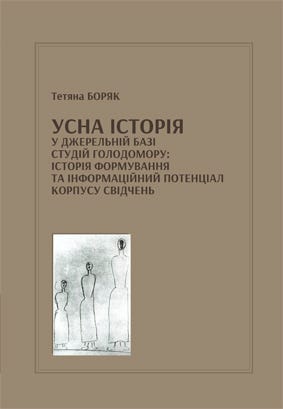
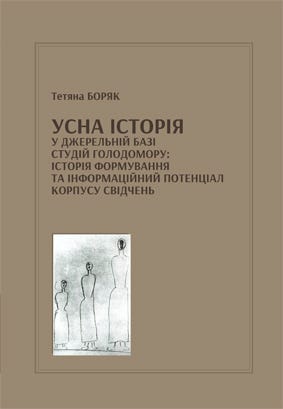
More on Tetiana Boriak: refugee from the Russian war, Ukrainian historian, and Doctor of Historical Sciences (Dr. habil.) (2024), PhD in History (2008), Associate Professor, Researcher at History Faculty, Vilnius University (Lithuania). Received her MA in History from Kansas University (Lawrence, KS, 2004–2006). She specializes in Holodomor, Soviet totalitarianism, memory studies and social history. Author of three books, two awards: “Oral History as a Source for Holodomor Studies: Formation of Eyewitness Testimony Collections and their Informative Value” (2024; Research Prize of the Rector of Vilnius University 2024 for “significant research work”); “1933: “Why Are You Still Alive?” (2016; the all-Ukrainian award “the Book of the Year” (2016, nomination “History”, category “Research/Documents”). MSCA4Ukraine (Marie Skłodowska-Curie Actions for Ukraine) Fellow (2025–2027). In 2013–2014 Fulbright Fellow at Harvard University (Ukrainian Research Institute, Boston, MA). Author of 90 articles of them about 40 articles on Holodomor. In 2010–2017 was an assistant of the journalist, researcher, columnist of the Washington Post, Pulitzer Prize winner Anne Applebaum in the project of preparation of an English-language book about the Holodomor in Ukraine for a Western audience: “Red Famine: Stalin’s War on Ukraine” (2017; two awards). Host of the historical educational program “History with meat” (2017– February 2022) – about 70 episodes, available on YouTube. Editorial board member of several journals and a member of several historical professional associations. Participated in more than 70 conferences.
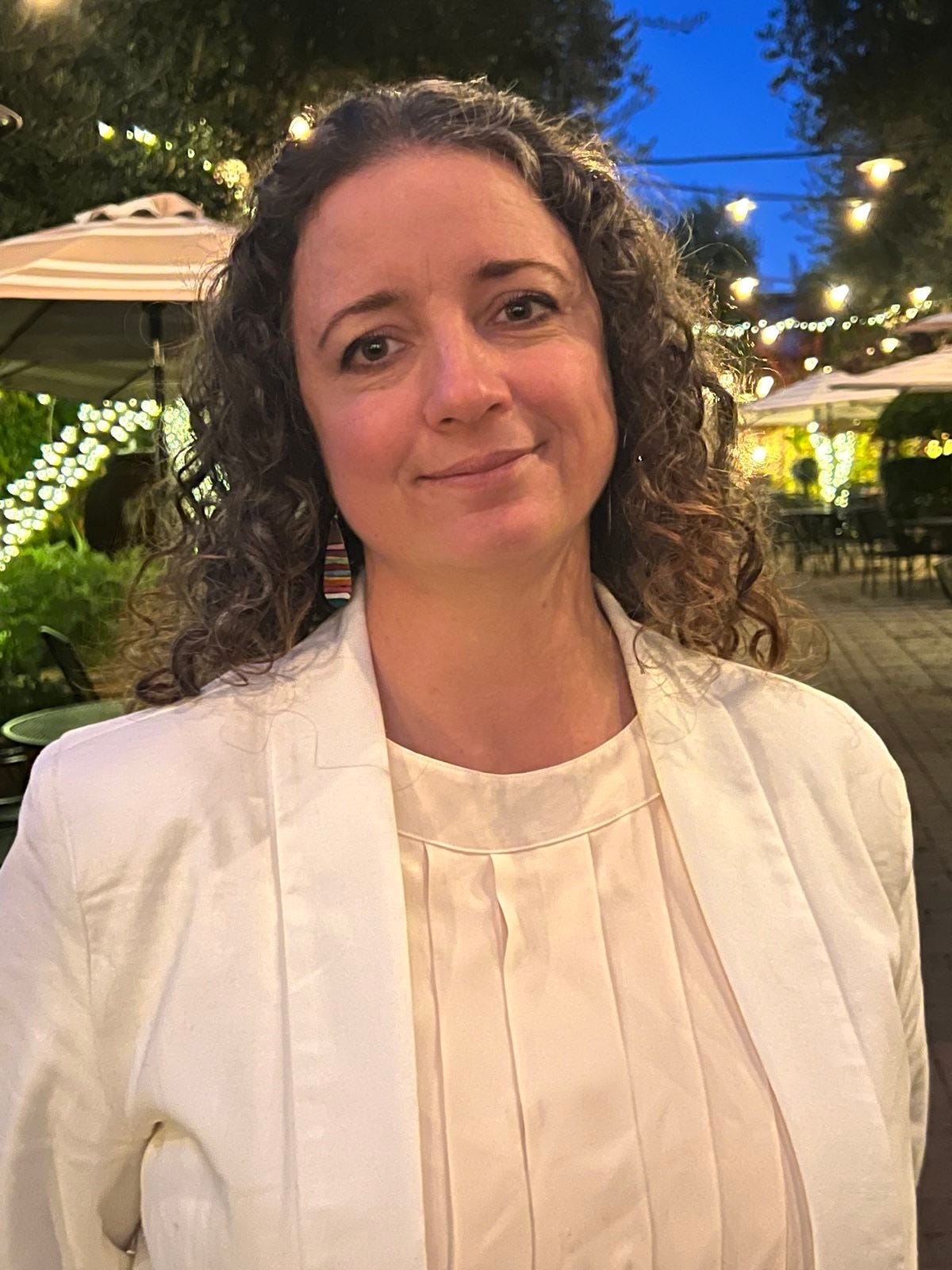
Photo courtesy Tetiana Boriak
****
****
Related:


****
Bette Dangerous is a reader-funded magazine. Thank you to all monthly, annual, and founding members.
I expose the corruption of billionaire fascists, while relying on memberships for support.
Thank you in advance for considering the following:
Share my reporting with allies
Buying my ebooks
A private link to an annual membership discount for older adults, those on fixed incomes or drawing disability, as well as activists and members of the media is available upon request at bettedangerous/gmail. 🥹
More info about Bette Dangerous - This magazine is written by Heidi Siegmund Cuda, an Emmy-award winning investigative reporter/producer, author, and veteran music and nightlife columnist. She is the cohost of RADICALIZED Truth Survives, an investigative show about disinformation and is part of the Byline Media team. Her Hot Type column appears in Byline Supplement. Thank you for your support of independent investigative journalism.
🤍
Begin each day with a grateful heart.
🤍
There is only one reason to praise Russia, and that is the assistance it provided the West during WWII. Before that and the day after the war ended there is no reason to praise Russia, especially since it grabbed so much territory after the war (Poland, etc.) I don't know what it is with the people and leadership of that country, but they deserve no help or recognition from us, especially when they are trying so hard to take over the US, both through an illegitimate president and an illegitimate political party (the republicans...)