

***Thank you for supporting independent investigative journalism in a time of grave peril with a paid membership.***
Author’s note: I will never forget where I was when I heard Timothy Snyder say that all famines are political. I was on a hike in Ernest Debs park in Southern California, gazing at sunbathing turtles while listening to Snyder’s Making of Modern Ukraine lecture series. I was stunned, I literally stopped cold on the trail to make sure I had heard him correctly. That led to me reading his book Bloodlands, and, subsequently, ramping up my interviews with global historians.
In our second Speakeasy event with Ukrainian historian Tetiana Boriak, she taught our community about the Holodomor. I learned something very important in that lecture — that discussions of history do not begin on the date of the event, but they rewind back in time, a decade, a century, whatever is necessary to lay the groundwork for the events to come. She began with a first famine in the 1920s, but also took us back to key events in the 1800s.
I asked her after the meeting if she could create a Holodomor timeline based on her research that I could include with my print report and she sent me such an incredible document I am including it for you today as a stand alone post. Please read it as a primer for my upcoming report based on her Holodomor lecture in Part 2 of our Speakeasy series with her, which occurred on November 23, 2025. Join me in learning about such bureaucratic evil as ‘The Law of Five Stalks of Grain’ while also contemplating the man-made famines of today.—hsc
Holodomor 1932-1933 timeline
The term “Holodomor”: Holod (famine) + Mor (exterminate)
1917–1921: Ukrainian Revolution, three waves of occupation of Ukraine by Bolshevik/Russian army.
1921–1923: first famine on the south of Ukraine. Draught was the reason. Despite it, the grain from Ukraine was transported to the Volga Region (Russia) to support starving Russian peasants there. Lenin denied the famine in Ukraine, unlike the famine in the Volga Region, to the international community. The reason of denial was usage of the famine as a political weapon to combat peasant resistance to Bolshevism in the Ukraine. That is awareness of the international community about the famine in Ukraine and the help to starving Ukrainians began to come only in 1922. 900,000 of famine victims in Ukraine.
1921: New Economic Policy was introduced to rebuild the country after the war and occupation as well to strengthen the Soviet power in occupied territories.
1923: introduction of the “Ukraininization” policy aimed to control cultural processes in Ukraine; to raise new generation of Soviet citizens indoctrinated with Soviet propaganda; to rule the conquered Ukrainians; to reveal the Ukrainians who supported the idea of non-Communist development of Ukraine; to gain support from Ukrainians who remembered Ukrainian Revolution; to create positive image of the USSR abroad as a democratic state that supports development of the nationalities. But the processes of national Ukrainian revival went out of control and began to be perceived as a threat for the Kremlin.
1925 – the policy of industrialization was declared; in 1927 – the policy of collectivization. This meant bringing all workers and peasants under state control, ban of private property, common work on the plants and in collective farms. However, resistance took place, especially among the peasants and collective farms were created slowly.
1929: Stalin declared the year 1929 “the year of the great break” – the politics of forced collectivization and industrialization.
1927–1932: peasant resistance in Ukraine that took forms of: murder of village administration; arsons; female revolts; imitation of work in a collective farm; leaflets; escape from the villages; refusal of party tickets; letters and appeals to the authorities; refusal to fulfill the orders on collectivization and grain procurements;
1930–1931: mass deportation of so called “kurkuls” (supposedly rich peasants, but basically all peasants who disagreed with the party policy) from Ukraine. Only in 1931, 31,655 rural families were deported (131,409 of peasants).
1930: the year of the biggest peasant resistance in the USSR. Ukrainian uprisings comprised 1/3 of the total Soviet revolts: 4098 (of them 3145 only in February and March) with more than 956,000 of participants.
March 1930: Fearing peasant resistance, Stalin demonstrated temporary retreat from collectivization in a form of an article in the press “Dizziness from Success” where he blamed the local authorities for all problems in the rural areas.
First half of 1932: 923 mass uprisings of peasants in Ukraine (out of 1630 in the USSR) against the implementation of collective farm system. 41,000 of peasant households left the collective farms.
July 1932: party conference in Ukraine that demonstrated resistance from the Ukrainian party leaders who were refusing to accept the grain quotas pushed by the Kremlin but were forced to.
August 7, 1932: a decree on preservation of state property, called by people as “The Law of Five Stalks of Grain” about ten years’ imprisonment or the death penalty for stealing state property, including wheat-ears grown by the peasants in the collective farms.
August 11, 1932: Stalin’s private letter to L. Kaganovich expressing fear “to lose Ukraine” if no measures be taken to improve the situation in the spheres of soviets (councils – facade organs of power called to create illusion of democracy), Ukrainian party and Secret Police. “The most important thing now is Ukraine. Situation in Ukraine is out of hand. ... If we do not start correcting the situation in Ukraine now, we may lose Ukraine. ... I repeat - we can lose Ukraine”.
October – November 1932: a set of decrees on persecution of collective farmers and individual peasants with fines and searches and putting them on the “black boards”. The latter meant physical isolation of the villages and rajons (larger administrative units from the outside world) and blockade from receiving any food or other goods. Stalin sent his two accomplices to Ukraine with extraordinary powers:
- V. Molotov (head of the Council of the People’s Commissars, an equivalent to the post of a prime-minister in democratic systems) to Ukraine to push Ukraine for larger grain procurements from Ukrainian peasants;
- V. Balytskyi as a special representative of ODPU (United State Political Department – Soviet secret police) to combat resistance in Ukraine.
Stalin sent his third accomplice L. Kaganovich (Political Bureau TsK (Central Committee) of VKP(b) (All-Union Communist Party (Bolsheviks)) member, first secretary of Moscow city and oblast party committees, in 1925–1928 – first secretary of TsK KP(b)U (Communist Party (Bolsheviks) of Ukraine, head of the party Central Committee and of the Agricultural Department of TsK) to the Northern Caucasus (Kuban where predominantly Ukrainians lived).
December 14, 1932: end of Ukrainization that is declared non-Bolshevik and pro-Petliura (Symon Petliura was one of the leaders of the Ukrainian Revolution) both in Ukraine and Kuban. Such decree manifested the national aspect of the Ukrainian resistance to Kremlin.
January 1, 1933: Stalin’s new year’s telegram to Ukrainian peasants that threatened with persecution to the peasants who refused to return “stolen” grain. This telegram intensified the confiscation of grain and food reserves from the Ukrainian peasants.
January 22, 1933: A secret directive closed the borders of Ukraine. Peasants in Ukraine and the Kuban (North Caucasus) were banned to cross the administrative borders and to buy train tickets.
January 24, 1933: VKP(b) adopted a resolution that condemned Ukraine’s Party leadership for failure in grain procurements and fight with “counterrevolution”. The party sent P. Postyshev and V. Balytsky to Ukraine with extraordinary powers to break the peasant resistance and wrong “non-Bolshevik” Ukrainization.
February 13, 1933: Secret police reported that in Ukraine it has revealed uprising underground in 200 rajons and on 30 railroad stations; the ties with the foreign Ukrainian centers and parties; the plan of armed uprising in spring of 1933 with the goal to set independent Ukraine.
Winter 1932 – spring, beginning of summer of 1933: the peak of the famine. With the new harvest of August of 1932 starvation began to decrease. However, in 1934 the mortality rates were still higher than the norm. Peasants demonstrated a variety of survival strategies: entering a collective farm; stealing in a collective farm; exchange of valuables and clothes for food; assistance by relatives, teachers, officials; escape from a village to coal mines, plants or a soviet farm; survival thanks to hidden food; survival thanks to a cow (for collective farm members only); participation in burial or searching brigades; consumption of surrogate food; leaving of children in the cities; cannibalism.
Amount of Holodomor victims is estimated as 3,9 million of direct losses and 600,000 of indirect ones.
January 26 – February 1934: XVII Meeting of All-Union Communist Party (Bolsheviks). Soviet propaganda called it the “Meeting of the Winners”. Stalin concluded that the “party line had won”.
1946–1947: third famine in Ukraine. The post war decay of agriculture and export of grain to support communist seizures of power in the European countries became the reason for lack of food reserves. However, like in the 1920s, the Kremlin used the famine as a weapon to atomize the Ukrainian society that lived for four years of the WWII under Nazi occupation and hoped for the radical changes in the Soviet policy. 700,000 of victims.
****
More on Tetiana Boriak: refugee from the Russian war, Ukrainian historian, and Doctor of Historical Sciences (Dr. habil.) (2024), PhD in History (2008), Associate Professor, Researcher at History Faculty, Vilnius University (Lithuania). Received her MA in History from Kansas University (Lawrence, KS, 2004–2006). She specializes in Holodomor, Soviet totalitarianism, memory studies and social history. Author of three books, two awards: “Oral History as a Source for Holodomor Studies: Formation of Eyewitness Testimony Collections and their Informative Value” (2024; Research Prize of the Rector of Vilnius University 2024 for “significant research work”); “1933: “Why Are You Still Alive?” (2016; the all-Ukrainian award “the Book of the Year” (2016, nomination “History”, category “Research/Documents”). MSCA4Ukraine (Marie Skłodowska-Curie Actions for Ukraine) Fellow (2025–2027). In 2013–2014 Fulbright Fellow at Harvard University (Ukrainian Research Institute, Boston, MA). Author of 90 articles of them about 40 articles on Holodomor. In 2010–2017 was an assistant of the journalist, researcher, columnist of the Washington Post, Pulitzer Prize winner Anne Applebaum in the project of preparation of an English-language book about the Holodomor in Ukraine for a Western audience: “Red Famine: Stalin’s War on Ukraine” (2017; two awards). Host of the historical educational program “History with meat” (2017– February 2022) – about 70 episodes, available on YouTube. Editorial board member of several journals and a member of several historical professional associations. Participated in more than 70 conferences.
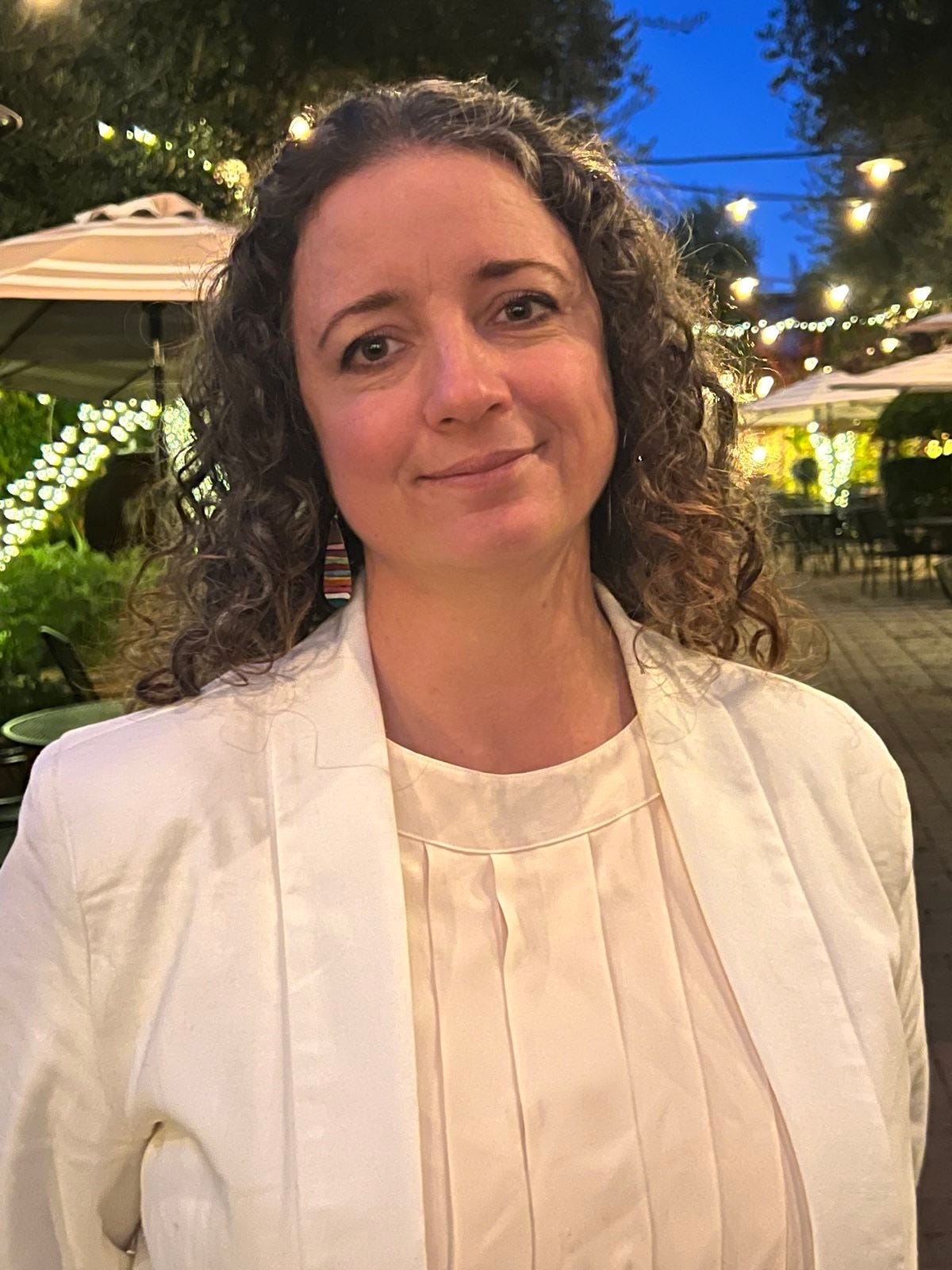
Photo courtesy Tetiana Boriak
****
****
Related:


****
Bette Dangerous is a reader-funded magazine. Thank you to all monthly, annual, and founding members.
I expose the corruption of billionaire fascists, while relying on memberships for support.
Thank you in advance for considering the following:
Share my reporting with allies
Buying my ebooks
A private link to an annual membership discount for older adults, those on fixed incomes or drawing disability, as well as activists and members of the media is available upon request at bettedangerous/gmail. 🥹
More info about Bette Dangerous - This magazine is written by Heidi Siegmund Cuda, an Emmy-award winning investigative reporter/producer, author, and veteran music and nightlife columnist. She is the cohost of RADICALIZED Truth Survives, an investigative show about disinformation and is part of the Byline Media team. Her Hot Type column appears in Byline Supplement. Thank you for your support of independent investigative journalism.
🤍
Begin each day with a grateful heart.
🤍