

***Please take out a membership to support the light of truth.***
Author’s note: I am always seeking lessons from history that can be applied to America’s troubles. So that is why I invited women who documented the war criminal trials for the former Yugoslavia so we could better understand the process that brought many people who committed genocide and crimes against humanity to justice. Back to back in early 2026, I invited Slavenka Drakulić, a journalist and feminist author who wrote a book about the trials, to meet with the Bette community; and Croatia’s first Deputy Prime Minister, Vesna Pusić, a professor of sociology and political theory from the University of Zagreb — who also documented the tribunals — to offer her perspective. Each told us in their own words that we have to keep a light on and find ways to resist what is happening in America.
We lost Slavenka four months after our interview — she passed away at 76 on June 10, 2026. Here I transcribe one of her last interviews, which happened to be with our community.

Today, I am offering a memoir from Vesna, of her very dear friend Slavenka.
These are incredible women who did groundbreaking work during brutal wars and under tremendous oppression and attacks. They found inspiration in each other. I am honored to be able to share Vesna’s memoir with you.—hsc
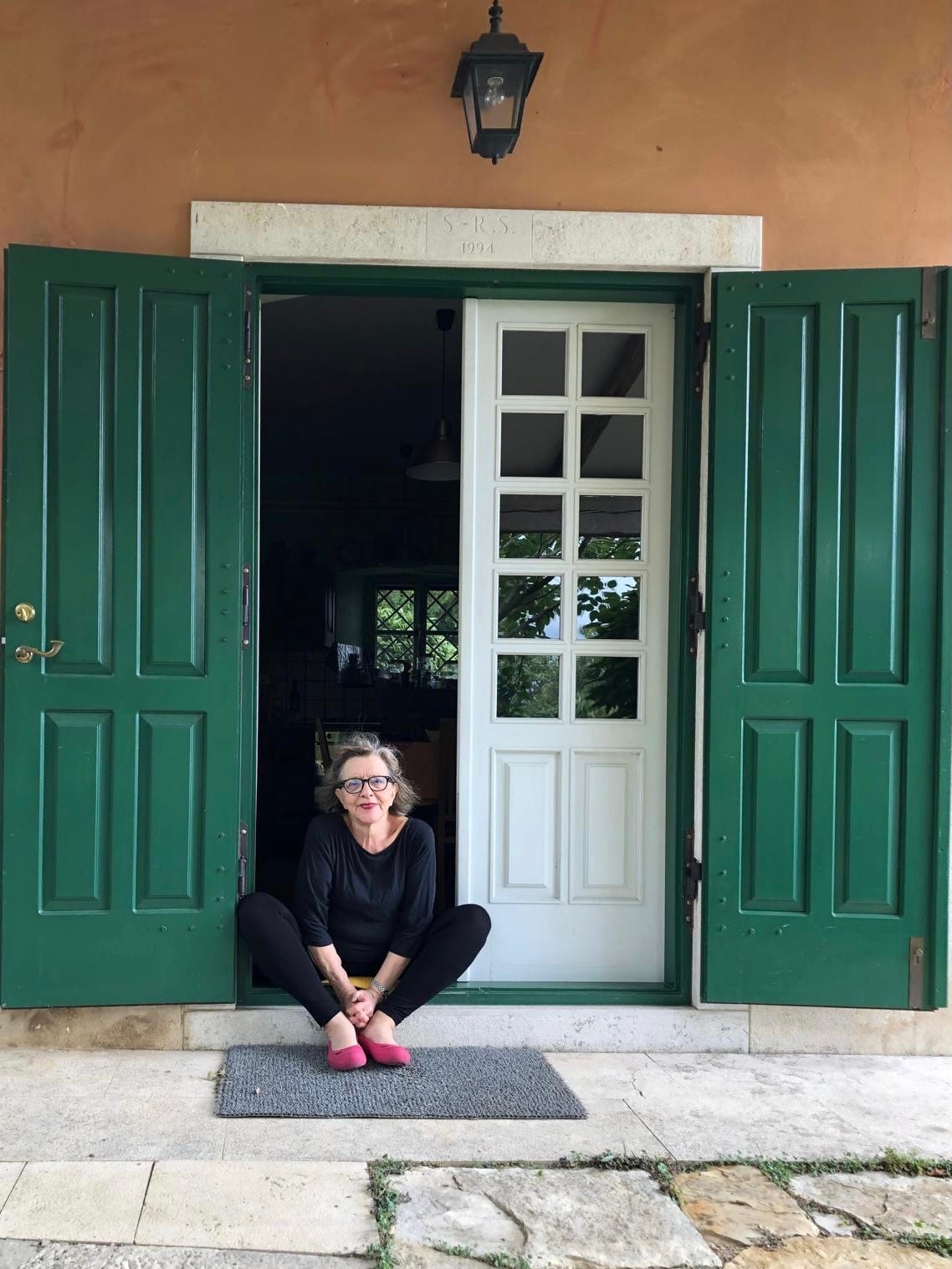
“Slavenka responded to every challenge, injustice, great tragedy, small sorrow, and catastrophe—from illness to war—by writing.”—Vesna Pusić
SLAVENKA — ‘A Companion of Life Itself’
By Vesna Pusić
Slavenka once told me that, as a little girl, she wanted to become a newspaper seller at a kiosk.
“Just imagine—you have your own little house that nobody else is allowed to enter. You lock yourself inside and read and read as much as you want!”
I met her when I was eighteen and had just enrolled in my first year at university. She, Bobo, Jadran, and the whole circle around them were already seniors, occupied with questions of revolution, as befitted those in the final years of study. She would come to the campus with a braid hanging down her back, often with little Rujana, her daughter, in tow.
Only later did I realize that, like most young women of her generation, she had been assigned the role of a “companion to the revolution”—that is, a companion to male leaders, including her own husband. And many times afterward, in different circumstances, people tried to push her into the role of someone’s companion or follower. But Slavenka was not made for that role. She was a companion of life itself.
That little girl who only wanted to read spent her entire life in the front lines of the struggle for truth, justice, and humanity. While the guys debated questions of revolution, Slavenka knitted sweaters and sold them to boutiques to earn money for her family; she finished university so she could find a job and provide everything Rujana needed. Reality checks and the criteria of everyday life were always her method.
She responded to every challenge, injustice, great tragedy, small sorrow, and catastrophe—from illness to war—by writing. Through writing and reading, but also through living a life that became much more demanding and complicated than most of ours at an early age, she arrived at feminism: the simple, self-evident idea that women and men are equal.
That conviction took its full shape at the major feminist conference organized in 1978 by Žarana Papić and Dunja Blažević. Slavenka’s Žarana, born on the same day and in the same year as Slavenka, passed away twenty-four years before her. Yet she left an indelible mark on all of us.
After the conference Comrade Woman in Belgrade, seven of us gathered in Rada’s apartment on Victims of Fascism Square in Zagreb and founded the first feminist group in the former Yugoslavia. Since our basic idea seemed so obvious to us, we were surprised by the ferocity of the reaction from both the authorities and certain male public intellectuals. They called us stupid, ugly, insignificant, frustrated, failures—but also dangerous, carriers of a “hostile Western ideology.”
Slavenka’s answer was her book The Deadly Sins of Feminism.
At that time, we did not even have terms like “civil society” or “non-governmental organizations” in Croatian. Our refuge was provided by our professor, Rudi Supek, within the Croatian Sociological Society. Thus the working group “Woman and Society” was born.
Around that time, Slavenka fell ill. There was enough worry and pain in those few years of dialysis, Rujana’s high-school years, and the growing up she constantly feared she was missing, to fill an entire lifetime. Kidney transplants were not yet performed here, but American friends helped find a hospital and doctor in Boston who ultimately transplanted a kidney for her.
She transformed the despair, uncertainty, fear, joy, and triumph of that experience into her book Holograms of Fear.
There, Slavenka’s credo was established:
“When life hits you with a stone, hit back with a book!”
Whether because of the many failed attempts to push her into the margins, or because of her irrepressible instinct for justice, she was drawn to women—great artists and scientists whose greatness had been stolen or denied. She wrote several novels about them, so vividly and authentically that international archives asked her to provide the documents and diaries she had quoted.
The diaries were, of course, fictional.
But the pain, loss, confusion, and sorrow were so real.
In her books lives that special sensitivity to complex human emotions, especially love. As if love were the most terrifying thing of all—and the most difficult. Her novels Divine Hunger, Marble Skin, and The Accused are only some examples of what Slavenka thought about love.
And while love is difficult, painful, and elusive, hatred is unacceptable.
During the war she wrote against war, against the hatred that leads to wars and that wars themselves generate; about ordinary people whom war turns into war criminals; about mass rape as the most vicious weapon of war; and about the mass scale of crime in which every victim and every perpetrator has a name and a surname, but neither a nationality nor a religion.
Her feminism, which defied misogyny, and her view that wars may be won or lost by states but are always, by definition, lost by every society, earned her the nickname “The Witch from Rio.”
She found herself in excellent company: Rada Iveković, Jelena Lovrić, Vesna Kesić, and Dubravka Ugrešić—all proud Witches from Rio, subjected to brutal and vulgar attacks by regime-aligned colleagues in the early 1990s.
Slavenka wrote more and more, and ever more fiercely.
Her answer was to become a world-renowned author.
We came to Sovinjak during that wartime summer of 1992. Because of the war, we could no longer go to Dalmatia, especially not with my daughter Daina, who had not yet started first grade. So we came to see the little house Slavenka had bought and renovated in Istria, in Sovinjak.
She greeted us at the cimiter—once a cemetery, now a beautiful little park shaded by wild chestnut trees, with the Mirna Valley and Ćićarija in the background.
This was her Bette Davis phase.
With her wavy shoulder-length hair swept to one side, penetrating slightly shadowed eyes, a narrow short black skirt, and an oversized white shirt, she spoke about a girl from a neighboring village whom she was trying to help escape a difficult family situation.
Our friendship grew like sediment – layer by layer. We had known each other for fifty-five years, but we were not always friends. Sometimes we were acquaintances, collaborators, kindred spirits—closer in behavior than in reality. There was a mutual attraction, yet during some periods we hardly saw each other at all.
Then came Sovinjak, and with it began our thirty-four-year Istrian phase.
Six months later, we bought a little house there too, renovated it, and spent the next twenty summers in it. That first view from the cimiter gave me the feeling that I could spread my wings and simply glide on the wind, like the small falcons soaring over the valley.
And Slavenka?
She was already flying.
Bursting with energy, she took us to the tavern in Hum, beneath the waterfalls of the Mirna cutting through white limestone rocks in Kotli, to Nevio’s for fuži pasta with truffles and black champagne in Vrh.
At the time, we had no idea how many ups and downs still lay ahead.
In the years that followed, she escaped death by a hair countless times—so often that it began to seem normal. I think the worst was when even the doctors believed she was dying on a ventilator from COVID and began preparing her husband, Richard, for the worst.
But Slavenka recovered.
And that COVID year we spent together in Sovinjak became the most beautiful year of our friendship.
After fifty years of companionship, for the first time we had long conversations alone about our thoughts, experiences, feelings, books, politics, and ideas; about our lives as they had been and as we still planned them to be.
Every great sorrow for someone dear is also sorrow for ourselves: because someone we love is no longer here, because our world has become poorer and emptier, because we are more alone.
That is why, in such moments, people talk so much about themselves.
In the end, with a new hairstyle, free from her usual ailments, in her somewhat larger kiosk—a beautiful house in Istria—she simply read and wrote. Cheerful and happy, she departed into a Sovinjak summer like the one in which we had once begun our Istrian adventure.
Slavenka left in a crescendo.
My teljica – my friend, our private pet name we called each other when no one was listening.
—Vesna Pusić, 6 July 2026
****
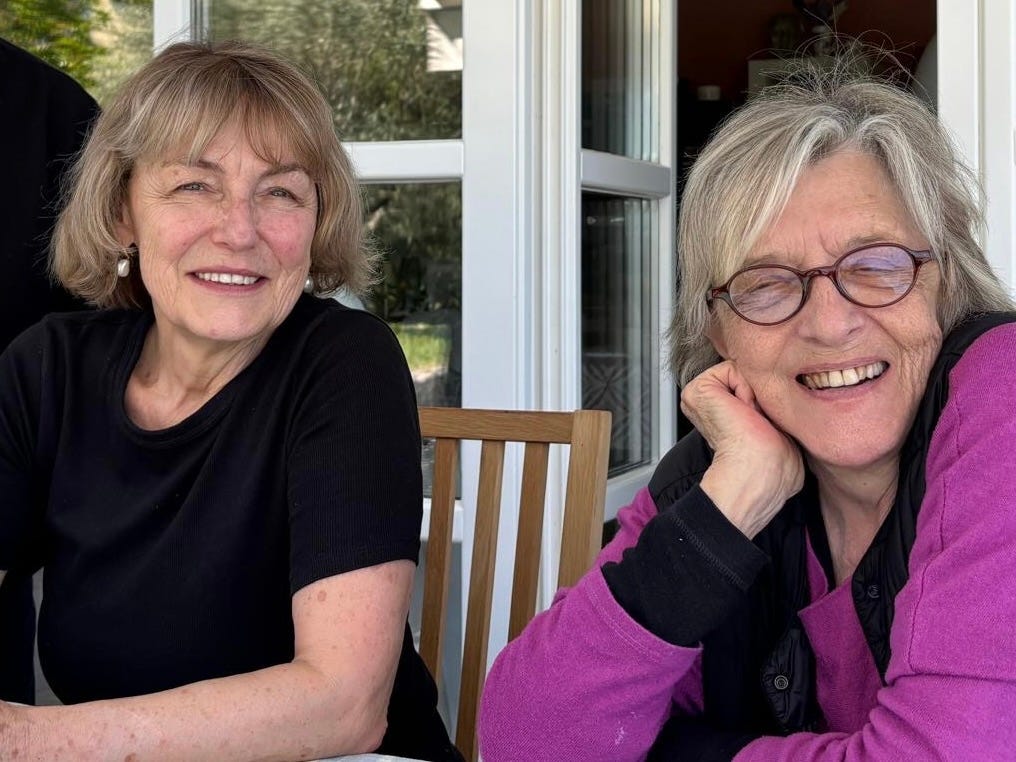
More about Prof.dr. Vesna Pusić
President of the Assembly and founding member - Foreign Policy Forum, Croatia (2021)
Official Candidate of the Republic of Croatia for the position of the UN Secretary-General (2016)
Minister of Foreign and European Affairs, First Deputy Prime Minister, Government of the Republic of Croatia (2011 – 2016)
Member of the Croatian Parliament elected in six terms (2000; 2003; 2007; 2011; 2015; 2016)
Chairwoman of the National Committee for Monitoring the EU Accession Negotiation (2007 – 2011)
Founding member and leader for 11 years of Croatia’s People’s Party – Liberal Democrats
Vice-President of the Party of European Liberals (ALDE Party) in three terms (2007 – 2013)
Member of the Board, Institute of Human Sciences, Vienna
Associate member of InterAction Council
Member, Center for Democracy and Law “Miko Tripalo”, a Croatian think tank focusing on SE Europe
Professor of Sociology and Political Theory, University of Zagreb
Founding member of the first feminist group in former Yugoslavia (1979) and author of multiple books and papers, recipient of numerous global awards
****
****
Bette Dangerous is a reader-funded magazine. Thank you to all monthly, annual, and founding members.
I expose the corruption of billionaire fascists, while relying on memberships for support.
Thank you in advance for considering the following:
Share my reporting with allies
Buying my ebooks
A private link to an annual membership discount for older adults, those on fixed incomes or drawing disability, as well as activists and members of the media is available upon request at bettedangerous/gmail. 🥹
More info about Bette Dangerous - This magazine is written by Heidi Siegmund Cuda, an Emmy-award winning investigative reporter/producer, author, and veteran music and nightlife columnist. She is the cohost of RADICALIZED Truth Survives, an investigative show about disinformation and is part of the Byline Media team. Thank you for your support of independent investigative journalism.
🤍
Begin each day with a grateful heart.
🤍