

***Please take out a membership to support the light of truth.***
Author’s note: Five years ago today, Vienna-based disinformation analyst Dietmar Pichler announced the first International Disinformation Awareness Day. He dedicated the day “to all those who contribute with their daily work to uncovering and containing disinformation. These are not only fact checkers, but also experts from different disciplines such as journalism, politics, history, security and science.” To honor this day and pay tribute to all of those who work hard every day to expose disinformation, I am posting a Q&A with Dietmar on the fifth anniversary of International Disinformation Awareness Day.
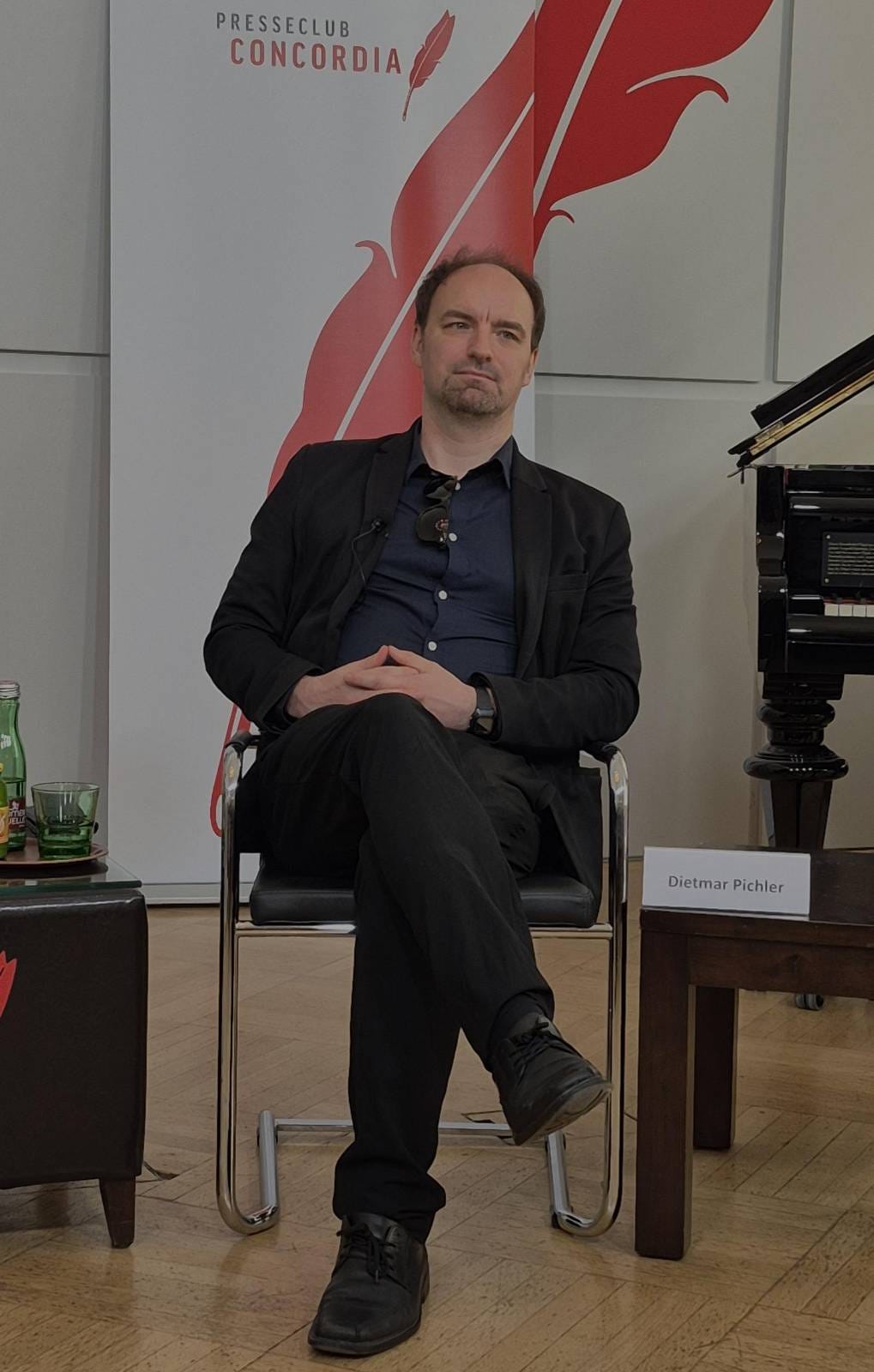
“Disinformation is neither a new phenomenon nor limited to social media. But the extent and speed of distribution today have reached dimensions that were previously unimaginable. Authoritarian regimes continue to use the methods of influence and subversion from the Cold War. Digital technologies have only supplemented the classic ‘active measures’, not replaced them. Even today’s influence agents in the service of foreign powers can today be almost stereotypical images of their predecessors from the Cold War, but also social media influencers.”—Dietmar Pichler, lead analyst and editor, INVED, and founder, International Disinformation Awareness Day
‘This day belongs to us all who work hard for the truth’
A Q&A with the Dietmar Pichler, founder of International Disinformation Awareness Day on the fifth anniversary of its launch
Heidi: Tell us about five years of International Disinformation Awareness Day. How it started and what it represents.
Dietmar: In 2021, during a time of increased disinformation because of the COVID-19 pandemic, ongoing Russian interference and a lot of fake news everywhere, I thought we needed such a day. I asked my Ukrainian friend Anna Pattermann, and she encouraged me and supported the launch. That was the beginning. The day itself is dedicated to all people who tackle disinformation, not only by debunking and exposing false information and propaganda, but also by providing facts and accurate information.
Heidi: In the five years since its launch, is there any reason to be hopeful that more people are savvier and aware of disinformation campaigns and how they are being targeted?
Dietmar: Not at all. We have increased awareness of the topic itself, but compared to how tense the situation is, we are not developing fast enough. Though I am thankful to all the good people I met on this journey over the last 5 years, you are one of them.
Heidi: What remains the biggest challenge to thwarting disinformation?
Dietmar: One thing is, we need to tackle the issue, but also protect democracy’s biggest value, freedom of speech. What I also, in my experience, find challenging is explaining to people that disinformation and manipulation do not only happen online. During the pandemic, we had doctors writing books that told us “COVID-19 is just a cough” and that a supplement (which they sell) helps instead of the vaccine. And since 2014, quite a few political scientists in the West have been telling us that Russia is reacting to NATO expansion and the West or the EU is to blame for the Russian war against Ukraine. And surprise, surprise, these people also appear on Russian, Iranian or Chinese state TV. I find it extremely challenging to raise awareness of this particular issue because it is hurtful for people to accept that some of their “intellectual heroes” may be agents of influence for authoritarian regimes.
Heidi: Do you think with the recent EU sanctioning of propagandists like Chay Bowes with RT and the Social Design Agency in Moscow, we are finally recognizing a distinction between free speech/journalism and foreign influence campaigns that threaten national security? That’s always been the tricky bit imo, and we see it still creates a massive divide online.
Dietmar: I have a quite radical view in favor of freedom of speech, with only a few exceptions, and I understand that people are skeptical about sanctions, but we need to understand that certain appearances, narratives and constant one-sided analysis are neither an “accident” nor “naive”. People deserve transparency. The media and critical-thinking civil society need to help establish this transparency.
Heidi: Is there any indication that the increased speed with which foreign interference operations are being revealed — like in the Paris protests — can that speed between events and real time evidence being exposed of foreign interference and manipulation help people see more clearly their domestic issues are being exploited by those who want them to give up their democracies voluntarily?
Dietmar: People in many cases refuse to see this. We now have protests against the EU “ReArm Europe” programme. Quite a few organizations that support these protests have very, very, let’s put it that way, “questionable views” on the Russian aggression. There is an extreme anti-NATO bias. Protesters asked about this answered: “We are not pro-Putin, we just are against their wars and they are preparing for war”. They meant the West, of course, and no further explanation is needed as to who benefits from that. No wonder Russian state channel RT made a documentary about the protests with a favorable view.
Heidi: We still never saw SDA’s list of global propagandists for Russia — how has this hurt momentum in exposing disinformation superspreaders?
Dietmar: We saw some names, we also saw people that the SDA identified as interesting voices in the West, some of them “useful” for them. Almost nobody speaks about it anymore. This is terrible. We should also put pressure on those responsible to release the full lists with all names. People deserve transparency. I think the files of the Cold War should also be released. All information about influence and subversion operations is useful. We are still only seeing the tip of the iceberg.
Heidi: How can people help spread the word about International Disinformation Awareness Day and the resources you offer?
Dietmar: I am glad about every mention, no matter if it is in real life, on social media, websites or traditional media. This is not my day. This day belongs to us all who work hard for the truth.
More about Dietmar Pichler:
Dietmar Pichler is Chief Analyst and Editor at INVED and has extensive expertise in the areas of disinformation, media literacy and foreign influence. He analyzes disinformation campaigns as well as propagandistic influence strategies of authoritarian regimes. In addition to his work at INVED, he works as a freelance media literacy trainer, consultant for strategic communication and disinformation analyst in Vienna. He is Vice President of the NGO Vienna Goes Europe and founder of the Disinfo Resilience Network initiative, which is dedicated to networking experts to detect and classify hybrid threats.
To support Dietmar’s work, you can make a donation here:
****
****
Bette Dangerous is a reader-funded magazine. Thank you to all monthly, annual, and founding members.
I expose the corruption of billionaire fascists with support from your memberships.
Thank you in advance for considering the following:
Share my reporting with your networks
Buying my ebooks
A private link to an annual membership discount for older adults, those on fixed incomes or drawing disability, as well as activists and members of the media is available upon request at bettedangerous/gmail. 🥹
More info about Bette Dangerous: This magazine is written by Heidi Siegmund Cuda, an Emmy-award winning investigative reporter, author, and broadcast news veteran, as well as former music and nightlife columnist for the Los Angeles Times. A No. 1 Amazon best-selling author and award-winning film director, Cuda writes the Hot Type column in Byline Times, an independent UK-newspaper. She executive produced the film Kherson: Human Safari. Thank you for your support of independent investigative journalism, arts, and culture reporting.
🤍
Begin each day with a grateful heart.
🤍