

***Please take out a membership to support the light of truth.***
“The Kremlin’s only real strength is having learned how to exploit our democratic weaknesses. If we manage to strengthen the robustness and resilience of our societies, our democratic and liberal values will once again become assets and tools to deter hybrid aggressors.”—David Colon
Author’s note: I am honored to introduce the Bette Dangerous community to David Colon, a French historian, researcher, author, and specialist in the fight against interference and manipulation of information (FIMI). I often report on the frontline states that successfully pushback on Russian interference and Colon is allowing me to crosspost his recent Substack post inspired by what Lithuania is doing to combat information interference. Bette Dangerous pages are filled with reports on fighting active measures from Estonia, Georgia, Romania, Croatia, and Lithuania, including an interview with Gabrielius Landsbergis, the former foreign affairs minister of Lithuania and former member of European Parliament, whose family has a history of battling Russian aggression.

In today’s guest post, Colon offers inspiration from what he calls the Lithuanian model, which features a ‘whole of society’ approach to thwarting interference. It should be noted that Tetiana Boriak, the Ukrainian historian leading our series on a century of Russian imperialism, now lives in Lithuania as a refugee. Although Colon wrote his post as an instructive essay on how Lithuania can inform France, I am crossposting his words today here in Bette, because I believe his assessment of Lithuania’s model can help to inform the remaining free world.—hsc
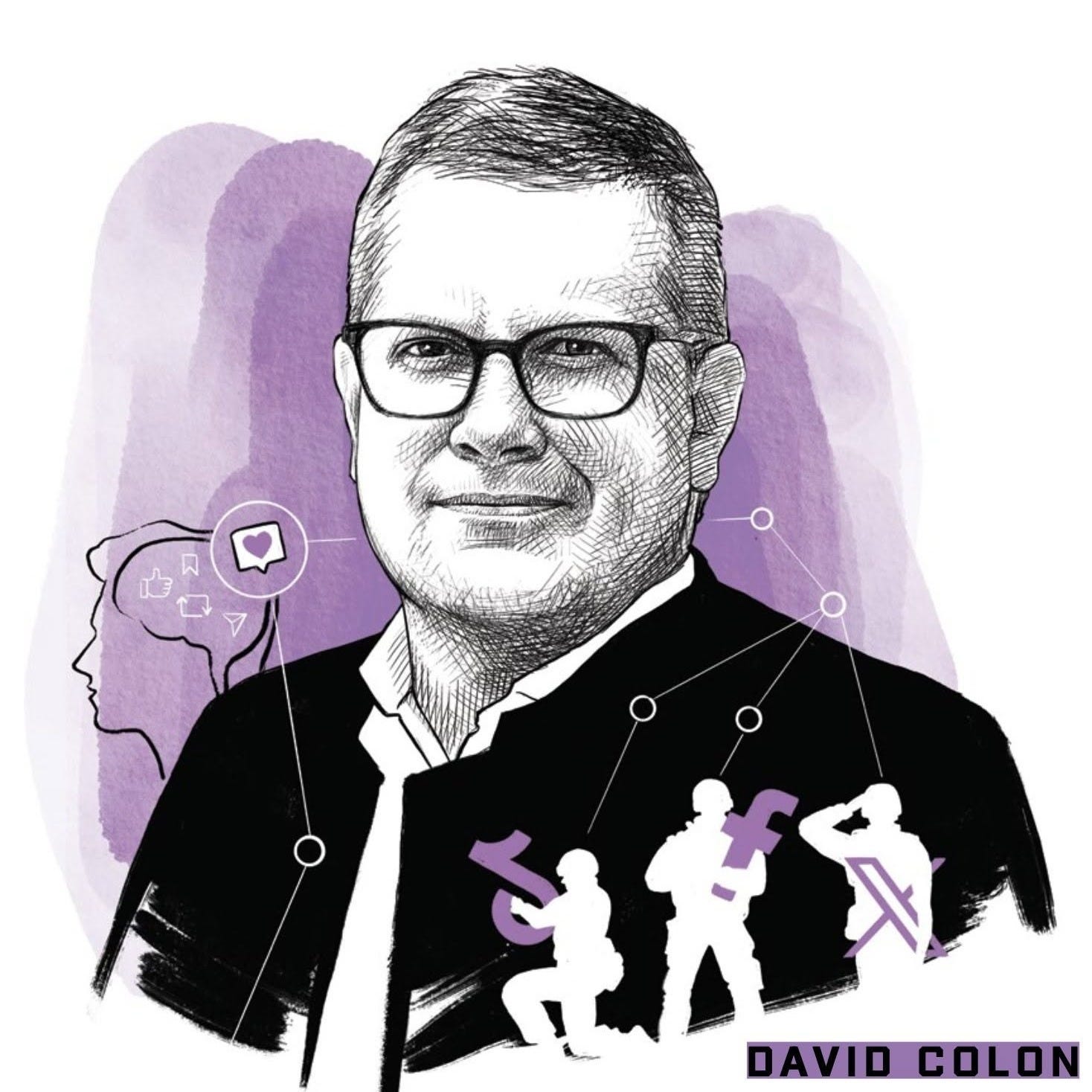
“The strength of the Lithuanian model lies in reinforcing democratic systems in the face of hybrid threats.”—David Colon
France should draw inspiration from the Lithuanian model for combating information interference
The land of the “elves” and “sprites” has made the fight against Kremlin “trolls” a national priority involving the entirety of civil society
Guest post by David Colon, originally published 30 August 2026, translated from French to English
I travelled to Vilnius this weekend at the invitation of the Institut Français to participate in a round table on disinformation with Michael Butter, a German specialist on conspiracy theories. It was my first visit to Lithuania, a country that has been under constant informational pressure from Russia since its independence in 1991, and finds itself more than ever on the front line in the fight against the disinformation and propaganda of the Kremlin and its Belarusian ally.
In their recent threat assessment, the two Lithuanian services, the AOTD (Intelligence of Defence Intelligence and Security) and the VSD (State Security Department), report an intensification of threats, ranging from the violation of airspace by Russian drones and information operations to cyberattacks and the activities of hostile intelligence services[1].
On the very day I left, rumours of an imminent Russian attack on Lithuania were swirling on X-Twitter and on the LCI set. Yet, upon my arrival, I felt no particular stress from my Lithuanian counterparts, who were surprised and even amused by the sudden anxiety of those very people who for a decade had ignored their warnings about the Russian and Belarusian threat. The explanation for this discrepancy in perception can be summed up in one word, which I heard constantly in Vilnius and read in reports on the Lithuanian model. That word is resilience, in other words, the physical and mental robustness of a society in the face of a crisis. Lithuania has indeed acquired a level of resilience that France, from my point of view, does not have, so much so that the slightest bit of fake content from Matryoshka is enough to agitate our media-political bubble for entire days.
France, it is true, suffers from many structural factors known to hinder resilience, namely societal polarisation, the predominance of populist discourse, low trust in the media, the fragility of public service media, and the intensive and uncritical use of social networks[2]. By contrast, Lithuania, while experiencing some of these factors – it is a “Facebook country” – has long and successfully pursued the only known strategy to strengthen resilience, namely the adoption of a comprehensive response involving the whole of society (Whole of Society Approach). In recent years, France has devised a highly effective state strategy to combat information manipulation, but it still struggles to mobilise companies, NGOs, and citizens to join its efforts. This is why it remains useful, if not essential, to turn our eyes towards Vilnius.
The first thing that struck me in Lithuania is how well ‘Russian trolling’ is known there, and has been for a long time. In the Bernardine Garden, I met up with Monika Garbačiauskaitė-Budrienė, the director-general of the public broadcaster LRT, which organises and broadcasts the round table as part of the ‘Būtent! Festival’. In 2016, while a journalist for the Baltic media outlet Delfi, she was already teaching her readers how to spot an Internet troll[3].
Since then, the campaigns to educate people on how to detect disinformation led by Delfi have not ceased. Its director, Viktoras Daukšas, founded the NGO Debunk.org in 2019, focused on applied research to combat disinformation. Debunk offers a course on civic resilience, InfoShield, designed to help citizens ‘discern credible sources, evaluate content and understand the impact of context’, as well as an in-depth online course for analysts and disinformation experts.
Recently, it partnered with the channel LRT to investigate disinformation actors on Facebook. The organisation produces more than 100 reports and articles per year thanks to its team of analysts and more than 200 active volunteers. Among them, those known as the “elves” specialise in fact-checking. However, more than by the elves, it is by the “elves” that the Lithuanian model is most distinguished.
Created in 2014 by Ričardas Savukynas, this vast network of volunteers, which is said to number 5,000 members today, is dedicated to “hunting Russian trolls”, unmasking them, refuting narratives hostile to Lithuania and thus contributing to their country’s counter-interference capabilities as well as to society’s resilience by developing citizens’ ability to detect trolls.
France has experienced something comparable with the Katiba des Narvalos, a collective of citizens that has been fighting against jihadist activities on social media since 2015, but it must be noted that we are currently sorely lacking an army of volunteer elves on X to flush out and counter foreign trolls as the presidential elections approach. And that it would not be useless to develop the ability of internet users to identify them, for example by adapting the excellent online quiz into French — https://spotthetroll.org/ — from Clemson University.
In Lithuania, as in Ukraine or Taiwan, the action of civil society has preceded that of the State, which consequently does not hesitate to rely on it without necessarily seeking to control it. It also does not hesitate to support it with grants aimed at strengthening citizen resilience: in 2024, the Lithuanian Ministry of Defence allocated 600,000 euros to fund projects led by NGOs[4].
The Lithuanian community engaged in the fight against interference is therefore particularly robust and plays an important role in raising public awareness and immunising it against malicious informational attacks. For example, the Civic Resilience Initiative (CRI), founded in 2018 by experts in media literacy, disinformation and civic engagement, offers workshops, conferences and training. In 2021, this NGO contributed significantly to the analysis of the instrumentalisation of illegal migrants by the Belarusian regime. Since then, it has precisely mapped the disinformation landscape in the Baltic states, published media monitoring reports, organised workshops for journalists and teachers, while using games as part of a prebunking.
Where France seems to rely primarily on media and information literacy in the classroom, the initiatives of Lithuanian NGOs make it possible to reach audiences that are often difficult to reach, such as the elderly. In 2022, for example, the DIGIRES project was launched by universities, media outlets, and independent journalists; it develops methodologies and media literacy courses to enable citizens to learn for themselves how to identify and analyse disinformation. Finally, in 2024, the Faculty of Communication at Vilnius University created the Centre for Research on Communicational Influences and Propaganda, which produces expertise and analyses on disinformation for a wide audience.
Nothing illustrates the close cooperation between the Lithuanian state and civil society better than the fact that NGOs and universities take part every week in the Strategic Communications Coordination Working Group, convened by the National Crisis Management Centre created in 2023 under the authority of the Prime Minister. The group coordinates monitoring, relying on the DISARM matrix (https://alliance4europe.eu/project/disarm-framework), evaluates the severity of information threats, and determines appropriate responses. It is capable of mobilising NGOs and volunteers at any time to relay strategic communication because, as the excellent Lithuanian expert writes, Nerijus Maliukevičius, the StratCom community “ was formed spontaneously and brings together people from state bodies, NGOs and academia”[5]. It promotes, he adds, “the exchange of knowledge, experience and personnel, allowing a “more agile, rapid and effective response to crises”. Finally, as in the other Baltic countries, the fight against disinformation has been established in Lithuania as a national priority, and as a major strategic issue, to the point of integrating disinformation into its crisis exercises.
Lithuania is undoubtedly emerging as a leader in the fight against the information interference of the Kremlin and its allies. Since 2014, it has successfully developed innovative response strategies based on a global and multidimensional societal approach and citizen engagement, whereas for the time being, France relies mainly on state action.
In 2023, Ukraine, Lithuania and Poland published the “Disinformation Resilience” report within the framework of the Lublin Triangle. Written by civil society organisations, it highlights the need for international collaboration to counter Russian propaganda and preserve democratic values[6].
In my view, this collaboration should primarily be one of civil society, NGOs, journalists, and researchers, and it is more urgent than ever to build a StratCom community on an international scale to coordinate the fight against the interference campaigns of the Kremlin and its allies. Here again, we can count on the pioneering role of Baltic NGOs: Debunk.org is currently developing FIMI STREAM, an artificial intelligence-based risk management platform for information-related threats, which will automate the collection, analysis and structuring of research on FIMI and disinformation, by producing and structuring data that can be integrated into the threat analysis systems commonly used by institutions[7].
The strength of the Lithuanian model lies in reinforcing democratic systems in the face of hybrid threats, in line with what Finnish expert Mikael Wigell called “democratic deterrence” in 2021[8]. The Kremlin’s only real strength is having learned how to exploit our democratic weaknesses. If we manage to strengthen the robustness and resilience of our societies, our democratic and liberal values will once again become assets and tools to deter hybrid aggressors.—David Colon, 30 August 2026
[1] Defense intelligence and security service under the ministry of national defense, State security department of the Republic of Lithuania, 2026 National Threat Assesment
[2] Edda Humprecht, Frank Esser and Peter Van Aelst, “Resilience to Online Disinformation: A Framework for Cross-National Comparative Research,” The International Journal of Press/Politics 25, No. 3 (July 2020)
[3] M. Garbačiauskaitė-Budrienė, « Atpažink Kremliaus trolį », Delfi, 30 June 2016
[4] Johannes Lindgren, James Pamment, Angela Palmer, Sanda Svetoka, Elīna Lange-Ionatamišvili, Countering Information Influence Operations in the Nordic-Baltic Region, Nato StratCom COE, Riga, January 2026, p. 38
[5] Nerijus Maliukevičius, “Fortifying Democracies: Lithuania’s Comprehensive Approach to Counter Disinformation and Propaganda”, Expert Grup, 2024, p. 4
[6] https://ukraineun.org/mail-sub/en/press-center/627-the-presentation-of-the-joint-report-resilience-to-disinformation-lublin-triangle-perspective-press-release/
[7] https://www.debunk.org/projects/fimi-stream
[8] Wigell, M. (2021). Democratic Deterrence : How to Dissuade Hybrid Interference. The Washington Quaterly, 44(1), 49-67.
DAVID COLON is a teacher and researcher at Sciences Po Paris. A specialist in the history of media and mass communication, he is the author of two award-winning books, Propagande (Flammarion, 2021) and La Guerre de information (Texto, 2025). Strongly committed to the fight against Foreign Information Manipulation and Interference (FIMI), he is a member of the steering committee of Reporters Without Border’s Propaganda Monitor, and of the World Economic Forum’s Global Future Council on Information Integrity.
****
****
Bette Dangerous is a reader-funded magazine. Thank you to all monthly, annual, and founding members.
I expose the corruption of billionaire fascists, while relying on memberships for support.
Thank you in advance for considering the following:
Share my reporting with allies
Buying my ebooks
A private link to an annual membership discount for older adults, those on fixed incomes or drawing disability, as well as activists and members of the media is available upon request at bettedangerous/gmail. 🥹
More info about Bette Dangerous - This magazine is written by Heidi Siegmund Cuda, an Emmy-award winning investigative reporter/producer, author, and veteran music and nightlife columnist. She is the cohost of RADICALIZED Truth Survives, an investigative show about disinformation and is part of the Byline Media team. Thank you for your support of independent investigative journalism.
🤍
Begin each day with a grateful heart.
🤍