

***Please take out a membership to support the light of truth.***
“You almost certainly don’t live in a governor’s race with $4 million ad budgets. But you live in a school district, a county, a council ward. These are the battlefields nobody is contesting, and they are the ones where the outrage economy has the least purchase. Notice that Amy Acton’s best weeks were spent in coffee shops. You can’t farm engagement from a neighbour who knows your dog’s name. People moderate when they have to share a car park afterwards.”—Matthew Pearce for Bette Dangerous
Author’s note: In a recent Speakeasy event with NAFO founding member and economist Matthew Pearce, he talked about how important it is to choose the battlefield in any political race and recommended Democrats stop responding to culture wars and get back to the reality on the ground. I asked him to expand on these concepts in a guest op-ed, and here is his response, which uses the Ohio governor’s race for a template. Bette members will recall how David Pepper, Dr. Amy Acton’s running mate, was a big part of the early days of Bette Dangerous, and one of the first, great pro-democracy lessons we learned from him was to get off defense and start playing offense.

I think he’ll like what Matthew has to say here. You can follow Matthew Pearce at The Angry Dogs Substack. Please share this Bette Dangerous guest post with your pro-democracy networks.—hsc
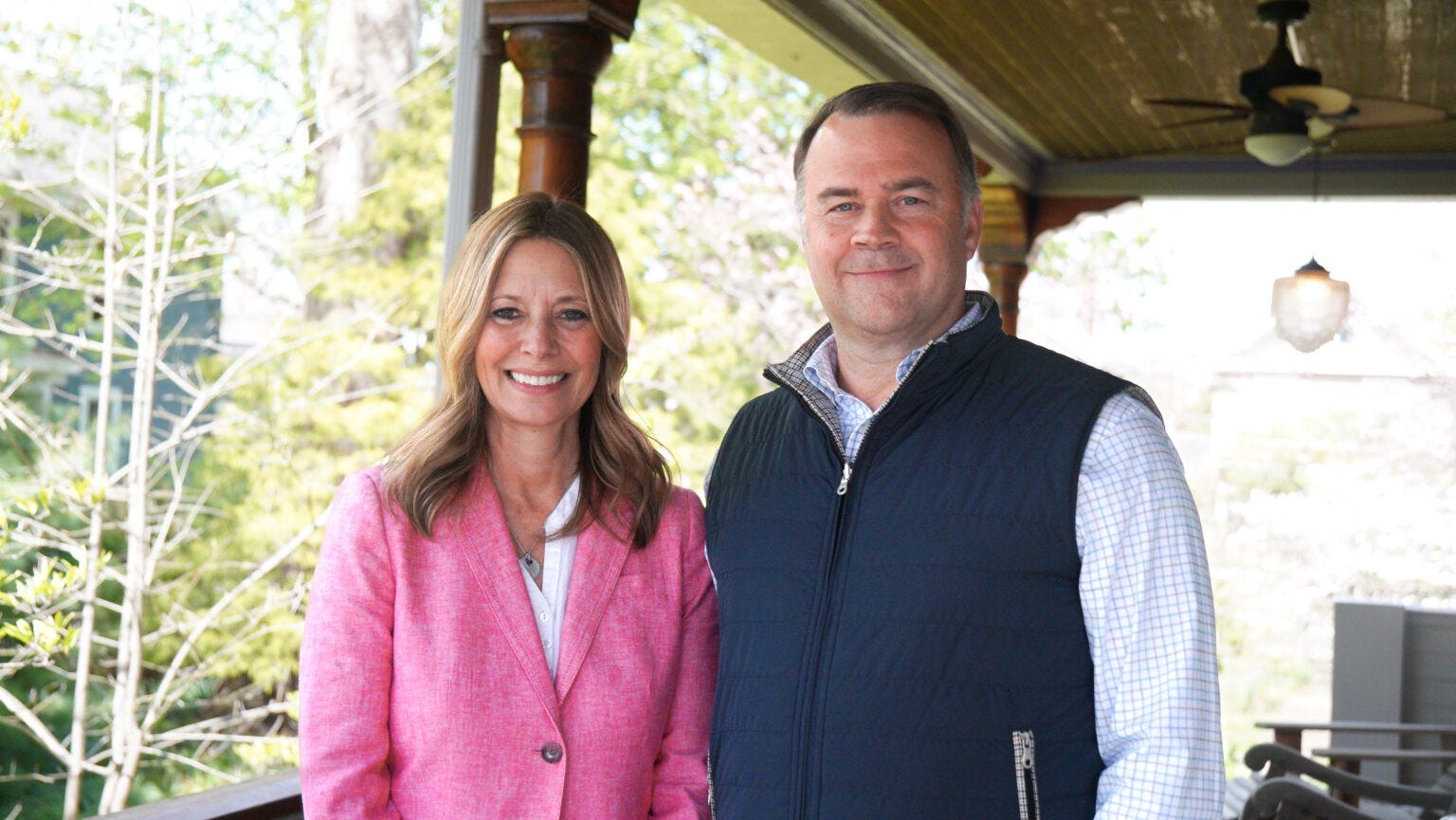
“Culture-war arguments are unwinnable partly because they are unanswerable: there is no budget line for a feeling or grievance. Local politics has budget lines. Ohio is about to show us whether voters reward the candidate who knows it.”—Matthew Pearce for Bette Dangerous
‘Don’t fight them on their ground’
What Ohio is teaching us about changing the battlefield
By Matthew Pearce
I write from Milton Keynes in England, which is a long way from Columbus, Ohio. But in January I sent a strategy note to the Democratic ticket in Ohio’s governor race. Its argument was old rather than clever: if your opponent is built for one kind of fight, the worst thing you can do is turn up and fight it.
Sun Tzu said it, Clausewitz said it, Kissinger said it in his own gloomy way. You change the terrain.
The terrain in question was attention. Vivek Ramaswamy is a master of it: fast, national, abstract and emotionally charged. Governing Ohio is the opposite. It is slow, practical and tangled up in agencies, budgets and statutes. My note’s advice was to refuse the attention contest altogether and drag every argument back to a boring set of questions. Which Ohio agency does that? What’s the budget line? What changes in month one?
I can’t tell you whether anyone read it. But with a week to go before the 3 November vote, the race makes a fascinating natural experiment, so here is how the predictions have fared.
Prediction one: the attention candidate peaks early
Ramaswamy entered the race as the clear favourite, with Donald Trump’s endorsement, in a state Trump has carried three times and which last elected a Democratic governor in 2006. As recently as last December he had nearly $10 million to Dr. Amy Acton’s roughly $1.5 million. By July the Cook Political Report had moved the race to toss-up.
The October polling tells the story. A CNN/SSRS survey gave Acton an eight-point lead, 50 to 42, with a 27-point advantage among independents. Bowling Green State University’s poll with YouGov had her six ahead, 50 to 44, double her margin a month earlier. A New York Times/Siena poll had her up four. There is a caveat: a co/efficient poll broke the run with Ramaswamy two points up, and ActiVote put him three ahead.
The race is close.
But there is one detail in the Bowling Green poll that I find telling: most Ohio voters still expect Ramaswamy to win. They assume the loud candidate is the strong one. The numbers suggest otherwise.
Prediction two: ask for the budget line and the abstractions fall apart
Ramaswamy’s signature pledge is to reset property tax valuations to pre-pandemic levels by mid-2027 and cap future growth, which he calls the biggest property tax cut in Ohio’s history. He started the campaign backing the abolition of property tax altogether, before walking that back. When the Ohio Capital Journal asked his campaign for the mechanics, it got none. Innovation Ohio estimated the rollback would strip around $4 billion from local services. The sitting Republican governor, Mike DeWine, warned Cleveland.com that abolishing property tax could push the state sales tax towards 20 per cent.
Then there is the plan to phase out Ohio’s income tax over ten years, with capital gains going first. Critics put the annual hole at $10.4 billion. His answer is to prosecute Medicaid fraud, which he estimates at $4.7 billion. You will notice those two numbers do not match.
This is what my note called fake Ohio-specificity: proposals that carry the state’s name but none of its constraints. They sound like governance and function as applause lines. The three questions expose them without anyone having to raise their voice.
For fairness: Acton’s own affordability agenda has been criticised for being light on funding detail, too. But hers is built from the kind of parts a state can actually move: an expanded homestead exemption for seniors and rebates for steep property-tax rises, fully funding the bipartisan school funding plan, an Ohio Rx platform using Medicaid’s purchasing power to cut drug prices, and a medical-debt relief scheme modelled on Illinois. Boring, specific, operational. That is the point.
Prediction three: when the terrain shifts, the attention candidate escalates, and farms the outrage out
My red-team exercise predicted that a disciplined opponent would force Ramaswamy to escalate, and that he would try to keep his own hands clean by outsourcing the outrage to proxies. That is a fair description of the final fortnight.
At a Youngstown rally on 12 October, Trump called Acton a “total lunatic” and relitigated the Covid school closures. When Acton published her affordability plan, Ramaswamy’s team dismissed it as something out of Zohran Mamdani’s New York playbook, which is a national metaphor doing the work an Ohio argument should. Then came the $4 million buy for a one-minute ad in which Acton’s estranged birth mother calls her a liar. The campaign manager called it a campaign-ending moment. Gateway Pundit and the Daily Wire cheered. DeWine called for it to be taken down. JD Vance backed it at a Cincinnati rally. Trump said Acton was fair game and that Ramaswamy should keep it up, then turned on DeWine for disloyalty.
So within a week the ad had split the Republican governor from the Republican president, and spread to other states: Iowa’s Senate nominee was being asked about it at her own rally. When a candidate’s party is at war with itself over his advertising, the outrage economy has started eating its own.
Prediction four: the governing candidate wins by being present but unexciting
For much of the race Ramaswamy gave few media interviews, while Acton did the unglamorous circuit: a roundtable at a Columbus coffee house, another at a Cincinnati brunch spot, small-business owners in Bexley on the day early voting opened. She has picked up the public-sector unions, the firefighters and, oddly for a Democrat in Ohio, a cohort of business leaders. Ramaswamy has the Chamber of Commerce. She has refused to debate him, which carries real risk, since it hands him a talking point he has used at every rally. But it is also a refusal to step onto his stage.
I should be honest about where her side has wobbled, because discipline is the whole game. Her campaign has called Ramaswamy a swindler and accused him of hiring his own mother to manipulate clinical-trial data. Personal attacks feed the other side’s machine. And on 24 October, Barack Obama flew into Cleveland to rally with her and Sherrod Brown, which by my own rules re-nationalises the race. Discipline is hard when the cameras turn up.
What this means for you
You almost certainly don’t live in a governor’s race with $4 million ad budgets. But you live in a school district, a county, a council ward. These are the battlefields nobody is contesting, and they are the ones where the outrage economy has the least purchase. Notice that Acton’s best weeks were spent in coffee shops. You can’t farm engagement from a neighbour who knows your dog’s name. People moderate when they have to share a car park afterwards.
Sun Tzu understood this twenty-five centuries before anyone had a timeline. “The clever combatant imposes his will on the enemy,” he wrote, “but does not allow the enemy’s will to be imposed on him.” And a few lines on: “In war, the way is to avoid what is strong and to strike at what is weak.” The national culture war is where your opponents are strong. It is their ground, their rules, their referees, and every argument you have there is an argument they chose. The budget line is where they are weak. Nobody has ever gone viral explaining which agency does what, and that is exactly why it works.
So here is a practical ask for the final week. Get off the feed and onto a doorstep. Knock on doors for a candidate in a race you can walk to, down the ballot if the top of it is spoken for. Go to the town hall, the school-board forum, the candidate’s coffee morning, and find the people who haven’t decided yet. Take the three questions with you.
Which agency does that?
What’s the budget line?
What changes in month one?
They work as well on a porch as in a council chamber, and they work on your own side, too. Ask them politely, then stop talking and listen. Nobody was ever persuaded by a quote-tweet. Plenty of people have been persuaded by a neighbour who turned up. And on 4 November, keep turning up, because the budget lines don’t stop when the polls close.
You must remember that culture-war arguments are unwinnable partly because they are unanswerable: there is no budget line for a feeling or grievance. Local politics has budget lines. Ohio is about to show us whether voters reward the candidate who knows it.
Go and find your village or town hall. Take biscuits and snacks.—Matthew Pearce for Bette Dangerous
****
Sources
Newsweek: Bowling Green and CNN/SSRS polls
Newsweek: co/efficient poll
Onmanorama/PTI: ActiVote poll and race background
WVXU: December 2025 fundraising figures
AP via KTTC: the mother ad and Trump’s response
Daily Signal: DeWine v Trump on the ad
Multistate: race summary, debate refusal, “swindler”
IANS: Youngstown rally
Ohio Capital Journal: property tax rollback
WYSU/Statehouse News: Innovation Ohio estimate
VisaVerge: income tax phase-out and Medicaid fraud estimate
Acton campaign release quoting DeWine on sales tax (via Cleveland.com)
WOSU: Acton property tax plan and union endorsements
Ideastream: Acton affordability plan
Washington Examiner: medical debt relief
WSYX: Ramaswamy campaign’s Mamdani line
Fox19: firefighters endorsement
Ohio Capital Journal: Cincinnati roundtable
Statehouse News Bureau via DeFi Rate timeline: Bexley event, Obama rally, early voting
FOX 5 Atlanta: Obama’s Cleveland rally for Brown and Acton, 24 October (video)
More about Matthew Pearce here:
Economist and technologist Matthew Pearce is founding member of NAFO, a founder of SE42 Labs Technology and AI Research Company; a writer for Washington Outsider Centre for Information Warfare; a writer for theangrydogs.com; and a stakeholder in the UK government Rycroft Report into foreign interference in British politics.

****
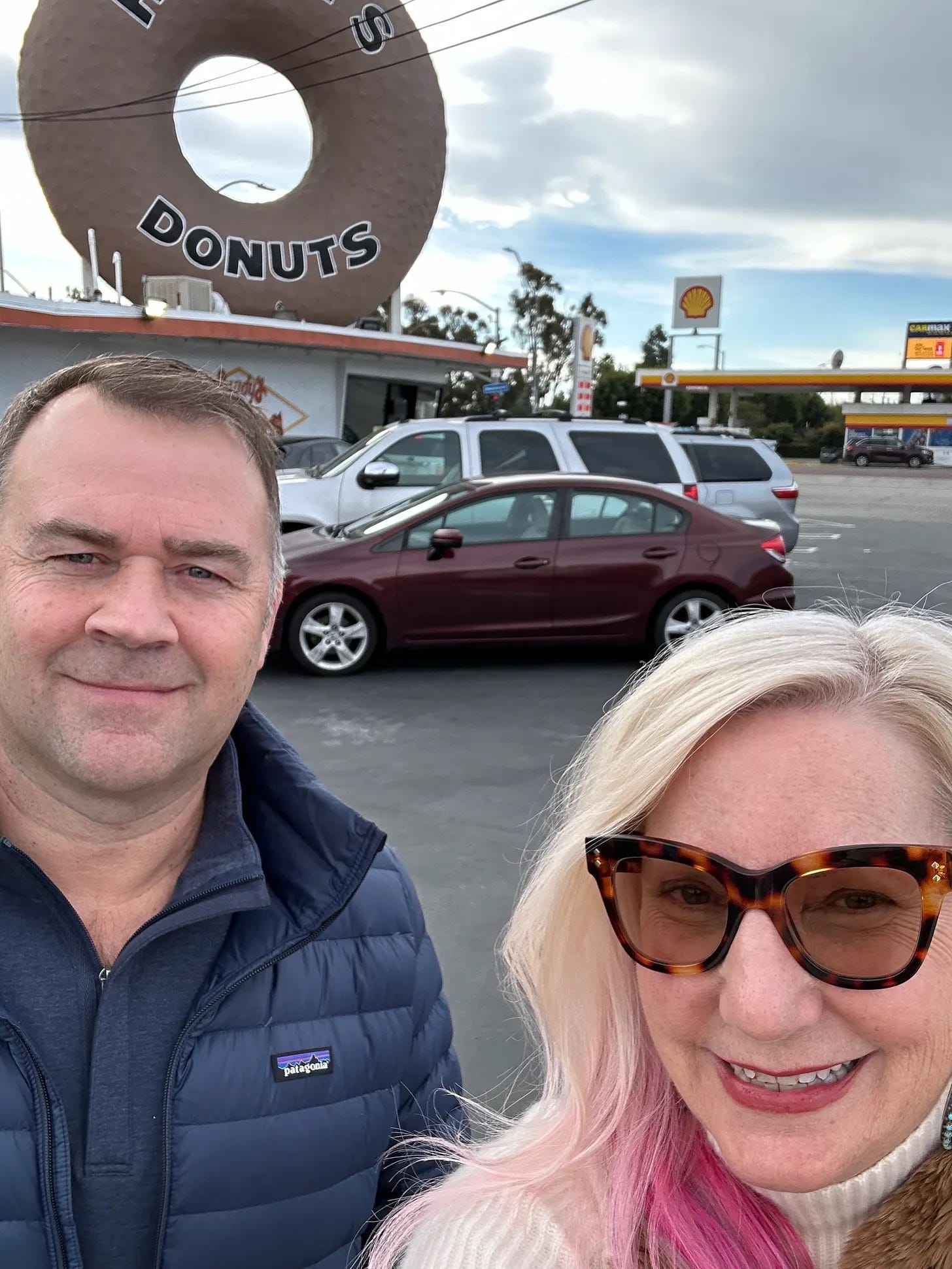
Getting Randy’s Donuts with David Pepper, February 2024. Pepper represents the best of America. Go Ohio go!
****
****
Related:


****
Bette Dangerous is a reader-funded magazine. Thank you to all monthly, annual, and founding members.
I expose the corruption of billionaire fascists with support from your paid memberships.
Thank you in advance for considering the following:
Share my reporting with allies
Buying my ebooks
A private link to an annual membership discount for older adults, those on fixed incomes or drawing disability, as well as activists and members of the media is available upon request at bettedangerous/gmail. 🥹
More info about Bette Dangerous - This magazine is written by Heidi Siegmund Cuda, an Emmy-award winning investigative reporter/producer, author, and veteran music and nightlife columnist. She is the cohost of RADICALIZED Truth Survives, an investigative show about disinformation and is part of the Byline Media team. Thank you for your support of independent investigative journalism.
🤍
Begin each day with a grateful heart.
🤍
Thank you for this timely piece.